

A travel agent will forward a quotation when it is already clear. They will rewrite it when it is not. Agent ready safari quotations are the ones that leave your desk as a page and a PDF the agent can send to their client with a short covering note, not as a chain of emails the agent has to turn into an itinerary. If you sell through agents, as many safari operators and DMCs do, that handoff is where trips are won or quietly damaged.
Agent ready safari quotations, and the rewrite you are trying to stop
The rewrite is rarely about style. It is about missing pieces. The agent has dates in one message, a lodge list in another, a price in a currency their client does not pay in, and an open question about a long drive that nobody has answered. Their client has a decision to make this week. So the agent opens a blank document and rebuilds the trip in words they can stand behind.
You have seen what comes back. A neat itinerary in the agent's wording, your camps described from memory, a drive time taken from a map, and a total that no longer matches the figure on your costing. The client then asks for one more night. The agent edits their copy. You edit yours. Two documents now claim to be the same safari, and neither of you is sure which one the client read.
That is the problem agent ready safari quotations are meant to stop. Not a prettier cover. A document that is already complete enough to forward.
Complete, here, has a plain meaning. The route is visible. The nights at each stop are stated. The drive between stops is given, not left as a bare transfer. The travel dates and the price are where a client looks first. Lodge photos are on the page. A day by day story explains what happens, in an order a stranger can follow. The agent adds a note in their own voice, about why this trip suits this client. They do not retype the itinerary to fill gaps you left.
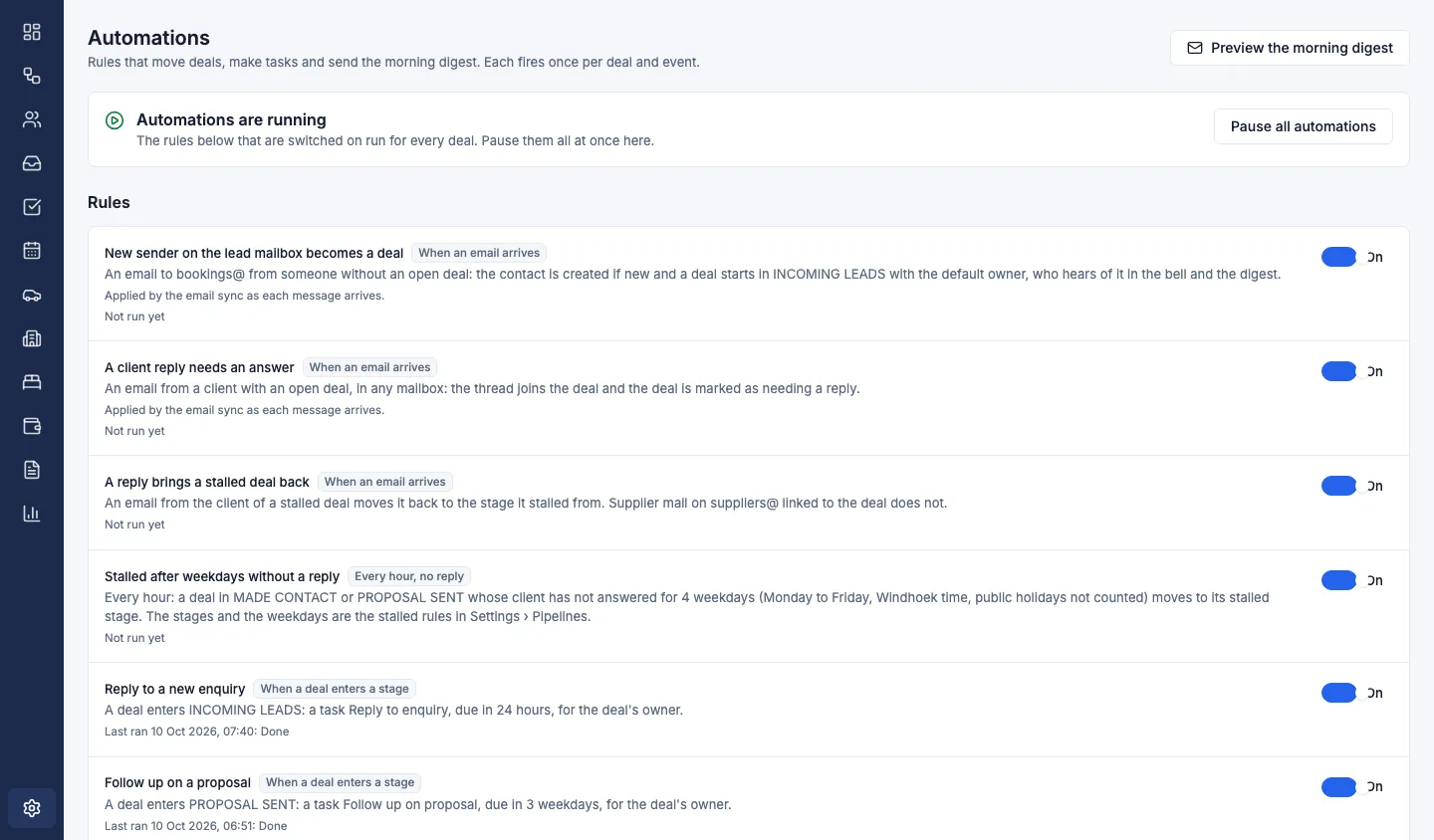
Safari Studio builds that document from work you have already done. One click turns the costing into the client's own web page: a route map with drive times, lodge photos and a day by day story, in your brand. A PDF comes with it. See how the page is assembled under proposals and route maps. The agent sends the page, the PDF, or both, without writing a second itinerary.
What the agent forwards, page by page
The client's screen is the test. They will read what the agent sent, not your email thread.
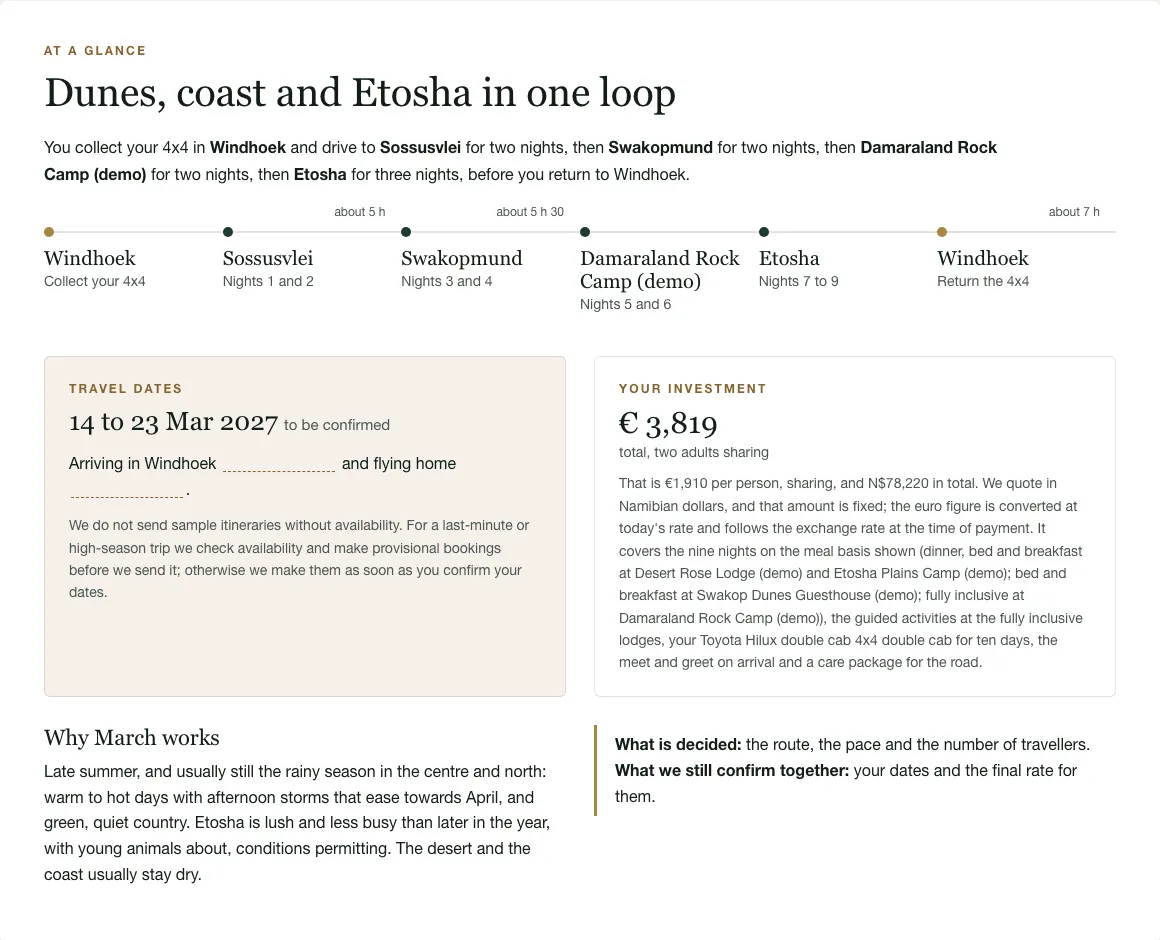
The proposal opens with the trip at a glance: the route, nights per stop, drive times, travel dates and the price. If those facts are missing, the agent writes them twice, once in a covering email and once in their own template, and small differences creep in. The price in the email and the price in the attachment stop agreeing.
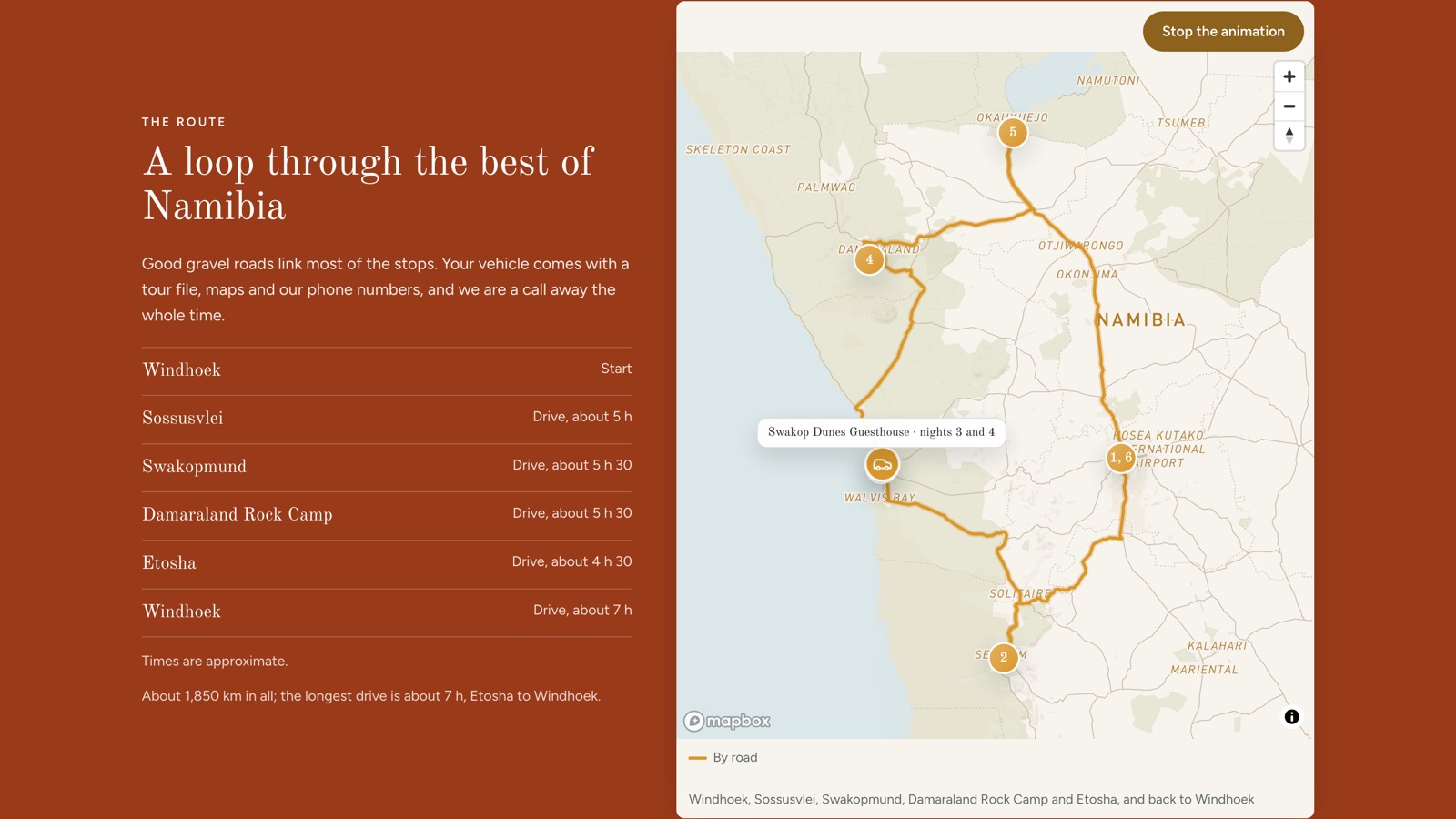
A map does the next job. Numbered stops, with drive times beside them, let a client see the shape of the journey without knowing the region. For example, a lodge operator in the Okavango selling through an agent abroad cannot assume that agent can picture the water and the road. The agent does not have to draw it.
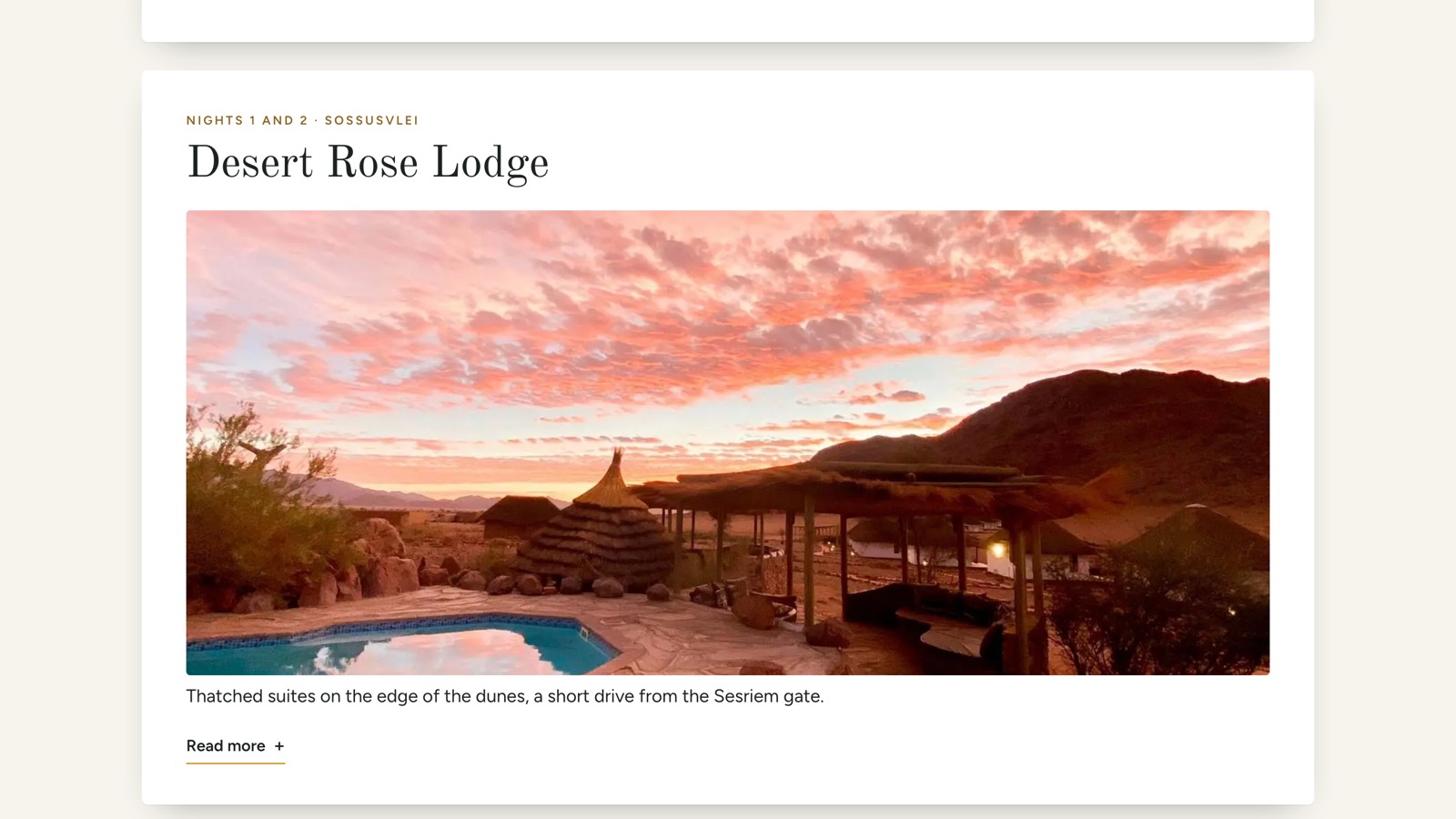
Lodge pages carry the stay, with each stop's own photos. The agent forwards that page instead of pasting pictures from a lodge website into a file they then have to maintain. A stated drive time does the same job for the road: the agent can repeat it, rather than guess, because it is already on the page between the stops.
The day by day story is what agents most often rewrite. A list of property names is not something they want to send. Written from the costing, in the order of the trip, it can stand. They should not have to infer a game drive or a long move from a rate sheet.
Your name should be on the document they forward. Logo, colours and theme sit on every proposal, quote, invoice and the client form, with four theme presets. On Pro and Max, your clients never see Safari Studio anywhere on them. Lite adds a small Powered by Safari Studio line. That is your brand on the quotation, which is what an agent is sending on. The detail is in branding for proposals and invoices.
A PDF comes with the page, for clients who print and for offices that will not open a link. Page and PDF come from the same costing, so the agent is not making a second file out of your email in order to have something their office will accept.
The quotation stays on the deal, not in a folder
A clear file can still fail the agent relationship if it detaches from the deal. The second email is where that happens. The agent replies with a change of date, a question about children, or a request to hold the rooms until Friday. If that reply sits in one person's inbox, and the quotation is a PDF in a shared folder, the next consultant starts from a document the client has already moved past.
Mail from every synced mailbox sits in one list, and each thread is linked to its client and deal. Gmail syncs both ways. Any other mail provider can arrive through a forwarding address. Needs reply flags mark what is waiting, so an agent is not left quiet because the message landed with someone on the road. Templates and signatures exist for every person and every mailbox. The thread stays beside the trip, which is covered under inbox and enquiries.
The deal is where the quotation belongs. Website enquiries arrive on the deals board as new deals, with the email thread linked. You drag deals through stages you define. Stalled deals and unanswered mail are flagged. Any currency is available, with its value at the day's rate. A direct enquiry and an agent enquiry can sit in the same pipeline, without a side list of agent quotes. More on that is at the deals board.
When a colleague opens the deal, they should find the costing, the proposal, the holds and the thread. They should not have to ask which version went out. The proposal stays with the deal. Your master does not leave the trip it describes.
For example, a reservations manager at a DMC might be in the field when an agent writes to extend a hold on a quotation already sent. The person covering the desk sees the request on the deal, next to the proposal, rather than in a forwarded email with the file missing.
Later changes stay in the same place
Later changes are where a forwarded quotation usually breaks. The agent amends the file the client has already seen. You amend yours. By the next round, a night or a vehicle day is the usual thing that fails to match.
Keep returning to the costing. You build it day by day with your lodges, vehicles and activities at the rates you negotiated. Each amount is stored with the exchange rate of the day, so the margin stays right when rates move. Totals can be shown per adult and in other currencies. A costing PDF is ready if someone needs the build of the price rather than the client story. The method sits in day by day costing.
When the trip changes, you change those days. A different lodge. A rest day removed. A vehicle kept longer. One click turns the revised costing into the proposal again. The agent receives the update from the same place as the first quotation, and the earlier messages remain on the deal. There is no second master in a drafts folder.
Quotes are made from that costing too, so the commercial figure and the story the client reads are not two truths kept by two people. On confirmation, the quote becomes a deposit invoice and a balance invoice, with a card payment button, in any currency. Every payment is tracked against the deal. You can see what is owed and what is paid without a spreadsheet beside the quotation. That path is in quotes, invoices and payments.
The agent does not only need a clear first send. They need the second send to be obviously the same trip, updated, so they can forward it again without becoming your editor.
Holds and the currency the agent will ask about
A clean page still gets rewritten if the agent cannot answer two questions: is it held, and what does it cost in the currency their client pays?
Every room you ask a lodge for sits on the holds board: requested, held with an expiry date, confirmed or released. Hold requests go to each lodge from the deal. Before a hold runs out, a chaser email is ready to go, so nothing lapses quietly. When the agent asks if the rooms are still yours, the answer is on the same deal as the quotation. See holds and expiry dates.
An agent will rebuild a quotation to show a selling currency, or a figure per adult, if you only sent one total in yours. Each costing amount is stored with the exchange rate of the day. Totals can be prepared per adult and in other currencies. On the deal, any currency is available, with its value at the day's rate. You record the rate you used. The agent does not invent one in the margin.
Say what the price includes in the day by day story, so the agent is not left to guess whether activities, park fees or the vehicle sit inside it. If something is excluded, write it where they will see it before they forward the page. A rewritten quotation is often an agent trying to protect their client from a surprise you could have stated once.
One order of work for the desk
Keep to one order of work, so the agent is not left assembling the trip.
- The enquiry is a deal, and the agent's email is linked to it.
- You cost the trip day by day at negotiated rates, with the exchange rate stored on each amount.
- You request holds from the deal, and you can see the expiry, before you call the rooms held.
- One click turns the costing into the proposal the agent will forward, page and PDF.
- Replies stay on the thread. A change is made on the costing, and the proposal is produced again from that deal.
- On confirmation, the quote becomes the deposit and balance invoices on the same deal.
What you still write is the judgement: the camps, the route, the wording. What you stop writing is the duplicate. The agent's note about their client is theirs. Your itinerary should not need their editing to be safe to send.
When several consultants handle the same agency, templates and signatures keep the covering note steady. They do not replace the proposal. The page remains the quotation. The person who is in the office can see unanswered mail on the deal, and does not issue a fresh version that contradicts the one already forwarded.
Send it on, then keep it true
An agent forwards what they can explain without calling you back. The page shows the route, the nights, the drives, the dates and the price, with photos and a day by day story, and a PDF from the same costing. When something moves, the change stays on the deal, so the next version is an update rather than a rival file.
You do not need the agent to rewrite you into something sendable. You need the first send to be sendable, and every change after it to live where the mail, the holds and the invoice already are.
Safari Studio is a CRM for safari operators, DMCs and the travel agents who sell their trips. Plans are monthly, quarterly or yearly, with a free trial and no card needed. Details are on the pricing page.
If you want to see a quotation an agent can forward without rebuilding it, book a demo or start a free trial.