

A quote can sit with an agent for days while their client checks dates, budgets and who is actually travelling. In that gap, reservation teams still need the camp. They place provisional safari booking holds so a lodge keeps rooms aside, even though the trip is not confirmed. The room is not sold. It is not free either. If that state lives only in one person's sent mail, two people can promise the same tent.
That is the double booking risk in plain form. A busy morning, a second enquiry for the same week, and a hold nobody else can see: that is enough.
Provisional safari booking holds, and the gap they leave
Provisional holds are normal when you sell safaris in Africa. The agent needs time. You still write to the lodge and ask them to keep the rooms. The reply may be yes, no, or yes until a named day. Sometimes there is no reply. Until it comes, you have a request, not a room. After it comes, you have a short reservation with an end. Neither is a booking. Neither should be private to one consultant.
For example, a reservations manager at a small operator in Maun might ask several camps to hold nights on one itinerary. One camp agrees until Thursday. One wants a deposit first. One stays silent. If those answers live in separate threads, a colleague can offer the same tents to a new enquiry, or turn a ready buyer away because the camp was already on hold.
The sharp risk is a room sold twice. The quiet risks cost money too. The hold lapses, and the agent confirms to find the camp gone. Or the agent declines, and the room stays blocked in memory, so you refuse the next guest for space you no longer have.
A spreadsheet of lodge, dates, expiry and owner works until that person is away, or until the sheet and the inbox disagree. A shared mailbox has the same crack. The mail is there. The state is not.
You still write to the lodge. Safari Studio does not replace their reservation book, and it does not offer a live availability feed or an allotment contract. What it changes is who on your desk can see the ask and the answer.
What the whole desk should be able to see
A hold has stages. You are about to ask. You have asked. The lodge has held the room and named an end date. The trip is confirmed. Or the hold is released, because the guest declined, the dates moved, or you gave the room back.
If the stages are private, each person holds a different week in their head. One thinks a camp in the Okavango is free. Another thinks it is held. A third has told another agent it is gone. They are not careless. Their notes do not match.
The holds board in Safari Studio shows every room you ask a lodge for: requested, held with an expiry date, confirmed or released. Requests go to each lodge from the deal, so the ask stays on the trip. Lodge and reference sit on the row. The whole desk can see a pencilled camp, including the colleague who never opened the original mail.
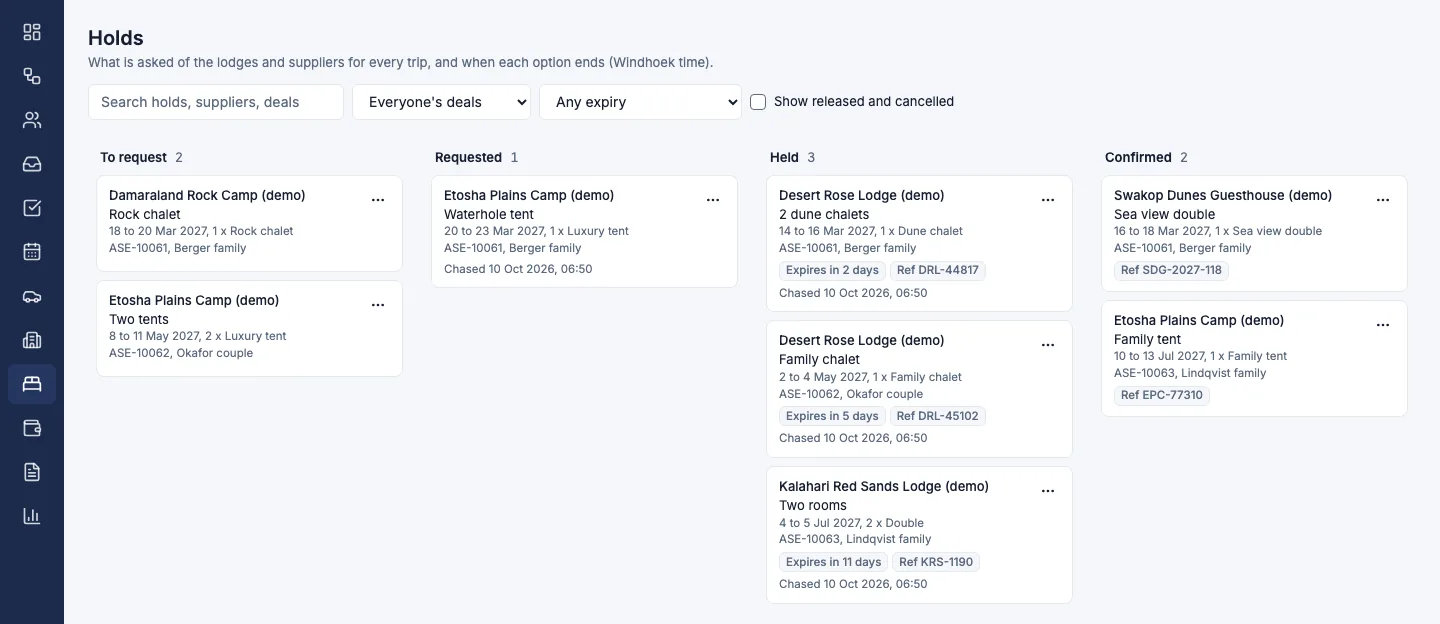
Rooms still to request matter on a long route. Until you have written to a lodge, that night is a plan. A quote should not leave with one camp never asked, while the agent thinks every night is secure.
When a second enquiry arrives, anyone can look first. If the camp is already requested or held on another deal, offer a different lodge, or say the dates are tight. Do not rely on a remark heard across the office.
Expiry dates, and the hold that dies quietly
A hold with no expiry is only a hope. Lodges set their own windows, often short, because other agents want those nights. Know which window belongs to which trip, and act before it shuts.
Every hold carries its expiry. Before it runs out, a chaser email is ready to go, so nothing lapses quietly. Someone still chooses to send it, and chooses the ask: more time, or a release. A bare date, with no chaser ready, is how a hold dies while the desk is on the road.
Those dates also belong in the month, beside meetings, safari dates, vehicle bookings and invoice due dates. A quiet Thursday may be the morning several holds end.
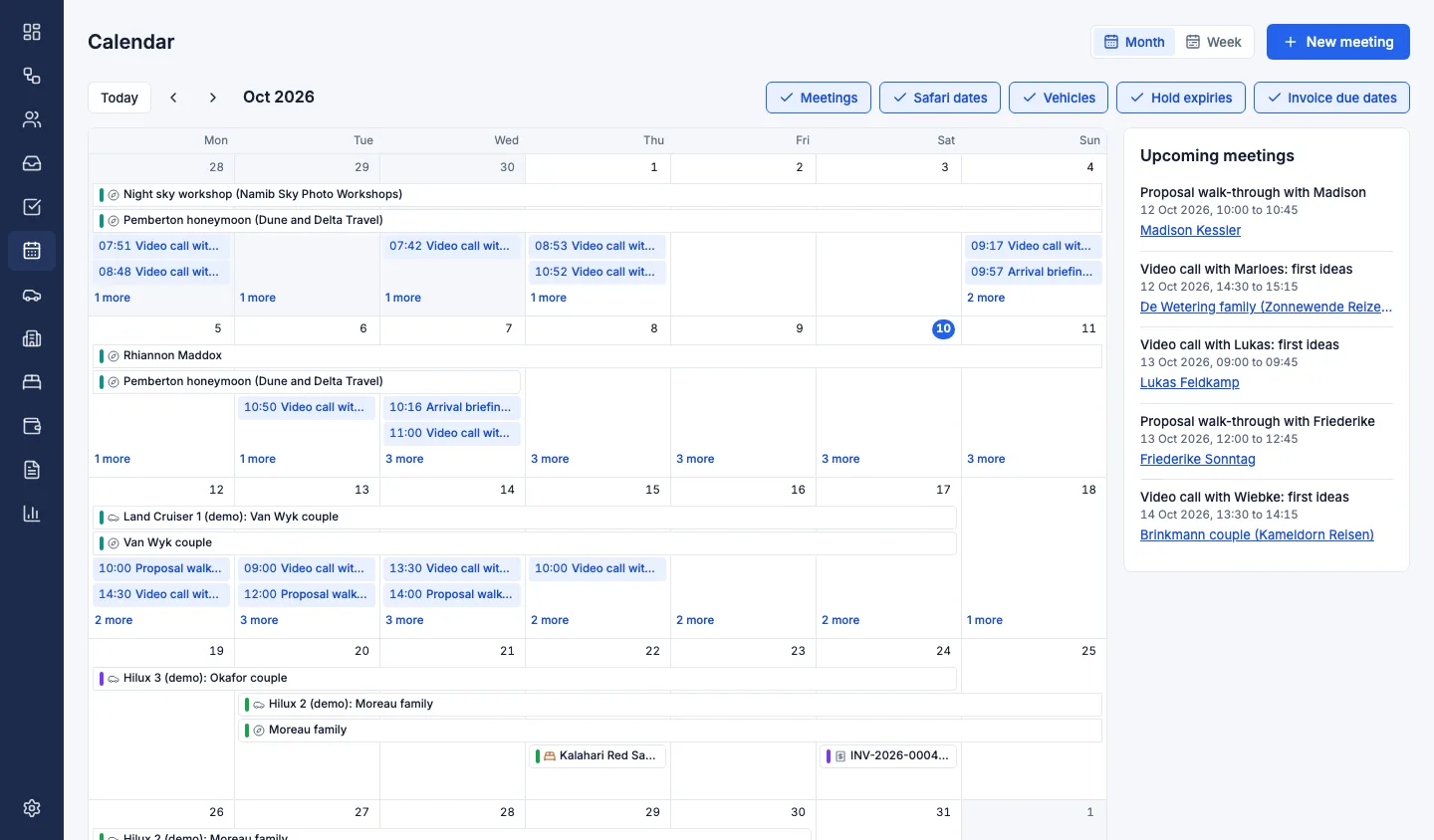
Read the undecided quote and the lodge window together. The agent has not said yes. The lodge will not wait without a limit.
Chase the agent from the inbox, where mail from every synced mailbox sits in one list, each thread linked to its client and deal. Needs reply flags keep a waiting agent visible. Gmail syncs both ways. Other mail comes in through a forwarding address. Or send the chaser to the lodge and ask if the window can move. Or release, clearly, so the room goes back and the board stops treating it as yours.
Releasing is not failure. It keeps camps willing to hold for you next time. A silent expiry makes the next hold harder to get. A board that still says held, after you should have let go, makes your team guard space you do not have.
Camps, vehicles, and two kinds of double booking
Desks also pencil in vehicles. A private trip often needs a car on the same dates as the camps. If the cars are yours, two quotes can claim one 4x4, because each person thought a provisional quote did not really count.
Rooms you ask a lodge for belong on the holds board. Cars belong on the fleet timeline: one row per vehicle, trips as bars, services and blocked days on the same line. Assign a car and the clash shows before it happens. No 4x4 is booked twice.
While the quote is open, that car is not free for a second group, and it is not confirmed either. Decline, and take the bar off. Confirm, and leave it for the next person to see.
If you hire cars instead, there is still no live yard link. Note the expiry on the deal, and do not treat the holds board as a fleet tool.
The quote is still a quote
A hold does not make a booking. Agents can hear the word held as security. Lodges hear a courtesy with an end date. Until there is a confirmation, write and record the lodge's meaning, not the hopeful one.
Tell the agent which camps are held until a named day, which are only requested, and which could not be held. Those sentences need a current board. A route that hides an unheld night fails at the moment of yes.
The trip lives on the deals board. Website enquiries arrive as new deals, the email thread linked. Drag deals through stages you name. Stalled deals and unanswered mail are flagged, which helps when a quote outlasts its holds. Sale and reservation are related. They are not one column.
Build the costing day by day: lodges, vehicles and activities at the rates you negotiated. Each amount keeps the exchange rate of that day, so the margin stays right when rates move. Totals can be per adult and in other currencies. A costing PDF is ready to send. None of this confirms a room. If a camp refuses the hold, change the costing before the agent settles on that night.
One click makes the client's proposal page: a route map, drive times, lodge photos and a PDF, in your brand. That page is what they are still deciding. Holds keep the nights possible while they decide.
On a yes, move the hold to confirmed, and make the deposit and balance invoices when you are ready to ask for money, in any currency, with a card payment button. Payments stay on the deal. On a no, or a date change, release the hold. Released stays visible, so nobody hunts an old email to learn whether the room is free.
A short routine for the reservations desk
Start with requested. The lodge has been asked, and has not held the room. If they are silent, the chaser is ready. Do not call those nights secure in anything you send the agent.
Then read held, and notice what ends today, tomorrow, and later this week. If you owe the agent a reply, send it before you ask the lodge for longer. If you are waiting, decide whether the expiry allows another quiet day.
Act that day. Chase for a yes or a no. Ask for an extension, and record the new expiry if they agree. Or release, tell the lodge, and stop your colleagues guarding a room you have given back.
A confirmed row should match a trip you will invoice. If you run cars, check the fleet line before you answer another enquiry in a pencilled week. Once a week, read what you released. Deleting a hold, instead of releasing it, is how the board starts to lie.
What a hold still is not
The board does not create rooms. The lodge does that. You do not control their inventory, and nothing in Safari Studio signs an allotment or opens a live availability link. You control the ask, the chase and the release, and you make those three visible to every person on the desk.
Your logo, colours and theme go on the proposal, the quote, the invoice and the client form. On Pro and Max, clients never see Safari Studio on those. The hold stays internal. Agents need a status in your voice, not your columns.
Safari Studio is a CRM for safari operators, DMCs and the travel agents who sell their trips. Plans are monthly, quarterly or yearly, with a free trial and no card needed. Plans and prices are on the pricing page.
The desk question is simple. While the quote is undecided, can everyone see which rooms are requested, held, confirmed or released, and when each hold ends? If you must ask the person who sent the mail, two careful consultants can still sell one camp twice.
Walk a current quote across the board with us, and book a demo. Or start a free trial and bring a trip that is still waiting on an agent. No card is needed.