

A family and a group of friends can book the same lodges and the same guide, and still need different answers. What does this cost per adult, and what does the child pay? Owners, reservations managers and consultants call this safari group costing. It is not a new kind of quote. It is a party that is not uniform.
A couple is straightforward: two adults, one room, one vehicle, one set of fees. Add children, or a second household sharing the car, and the rack rate stops being the quote. Someone has to apply the child rule, decide what is shared, and keep the margin visible when the party changes.
The owner still checks the margin. Reservations still has to put those rooms on a real vehicle. The job is the same at a DMC and at a small operator.
Why safari group costing is not a larger couple's trip
Copying a couple's itinerary and adding names feels quick, and it is how the file loses money. Adults and children rarely pay the same lodge rate, the same park fee, or take the same activity. One child may share with parents. Another may need a room, because of age or because the tent will not take three.
Three mistakes follow. The child is charged as an adult. The vehicle is split per person when you buy it as a vehicle, so the group looks dearer than the contract, or cheaper than the guide days you will pay. The margin was built on adult commission, and a reduced child rate does not replace it.
Build the trip as it will run. Each night, each vehicle day and each activity takes the rate for that person. Then read the total per adult from the finished sum. The mail has to match the deal. A per adult amount that assumes a car you cannot assign is not a quote.
Child rates, in the lodge's own words
There is no single child rule. One camp charges a share of the adult rate when a child shares. Another uses a set rate to a stated age, then the adult rate. A third waives the bed for a young child and still bills meals or fees.
Use the rate you negotiated for that year and that season, not the last family you remember. Safari Studio stores lodge rates by year and season, with the commission beside them. Low, shoulder, high and peak sit on the supplier.
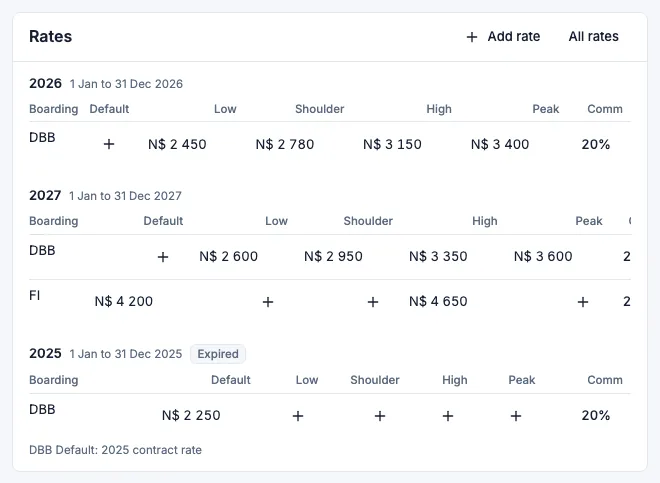
Four checks before you price the night:
- Adult rack, or the nett you pay, for the room you will book.
- Child rate, and whether it assumes sharing or a room alone.
- What is included: meals, activities, laundry, park fees, or none of these.
- Commission, if you sell from rack.
For example, a lodge operator in the Okavango may price a sharing child on a reduced rule, and a separate tent as a tent plus meals. A city hotel may use another age band. Cost them as separate lines.
If a birthday on the trip ends a reduced stay, those nights are not one price. Keep the date of birth on the client. Park fees often follow their own child rule, so give them their own lines unless the package includes them. Skip an activity the child will not do, and say so, or you will be asked to add it later.
The schedule has to be day by day, with commission visible, so a colleague can see why one night is cheaper.
Shared vehicles: one cost, several travellers
Many contracts price vehicle and guide as a day: the 4x4, the guide, sometimes fuel, sometimes the vehicle's park entry. That does not fall because a seat is a child, and it does not rise just because four guests replaced two, until you run out of seats.
A seat on a set departure grows as you add a person, often at a child rate. Know which contract you are in before you say per person.
Cost the unit you pay. Days for a vehicle rate. People for a seat rate, adults and children on the rates that apply. Two families on one private vehicle usually share that day. A family buying a seat on a group departure should not also pay part of another private guide.
Add a second vehicle when seats, luggage or the children's pace make one vehicle untrue. Put it in the first quote, not after the holds are placed.
The fleet has to match. Every vehicle sits on one timeline with its trips, services and blocked days. Assign a car and the clash shows before it happens. No 4x4 booked twice. See the fleet timeline.
A larger party on a fixed daily vehicle reduces the share per adult. The lodges may not fall. When someone drops out, that share usually rises. If the guide still goes out while some guests stay in camp, do not halve the vehicle. Cost the day as it will be driven.
Building the nights, then the people on them
Open the costing on the client's details, with adults and children clear. Lay each night at rack, with commission, not as one line for the whole safari.
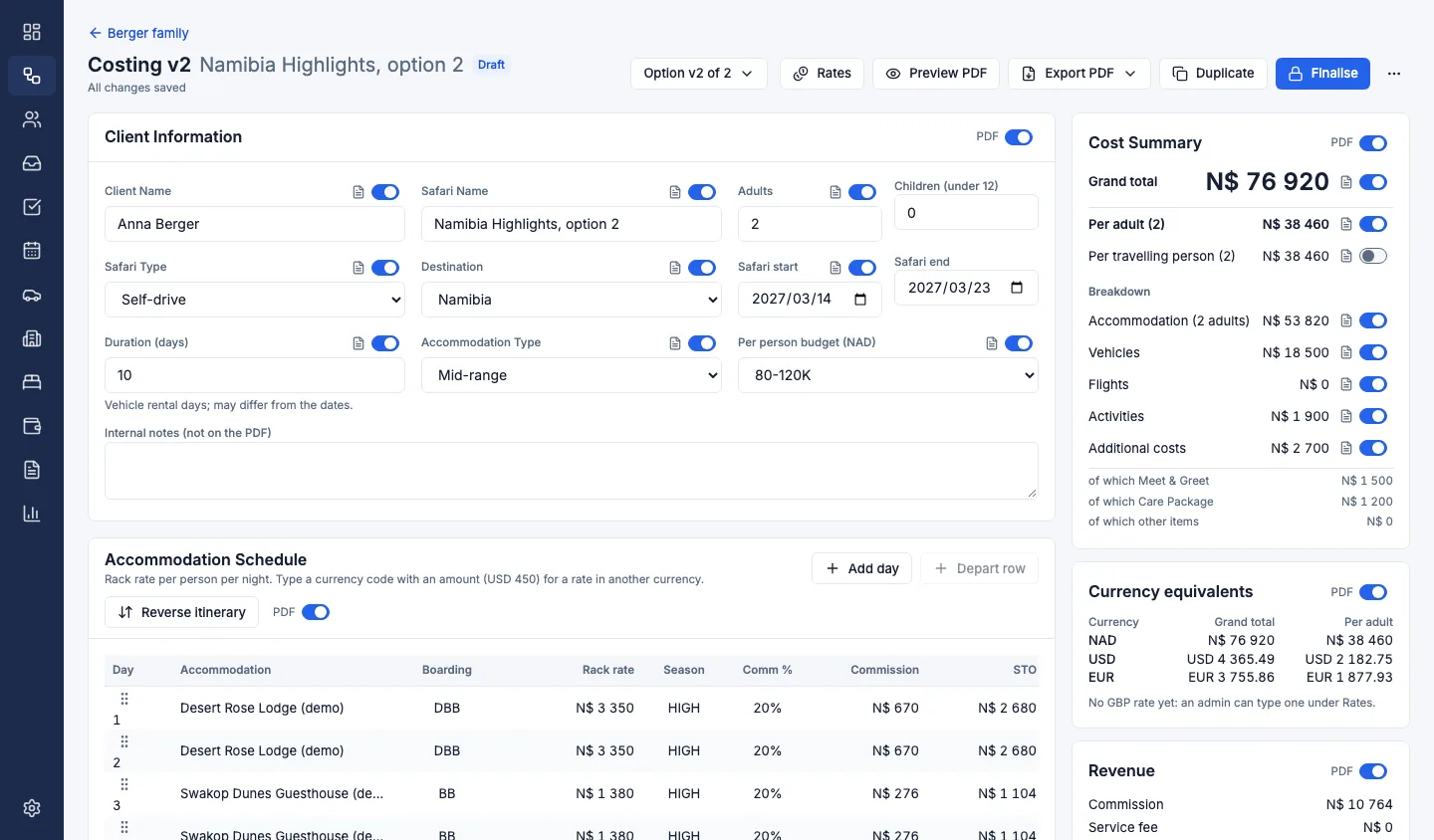
A city night may use a hotel child policy. Bush nights may be an adult room plus a sharing rate. Do not let a shoulder night inherit peak because it sits between peak lodges. List activities for the people who will do them. Vehicles sit in the same costing, at the rates you negotiated.
Each amount is stored with the exchange rate of the day, so the margin stays right when rates move. Totals per adult can be read in other currencies.
Holds should match the rooms on the costing. Each request can show as requested, held with an expiry, confirmed or released, and a chaser is ready before a hold runs out. Work that list on the holds board. If you pay a guide room, cost it as its own line.
Totals per adult, read in order
You need a grand total that is true, and a per adult amount you can explain. The summary shows both, with the breakdown, currency equivalents and the internal revenue.
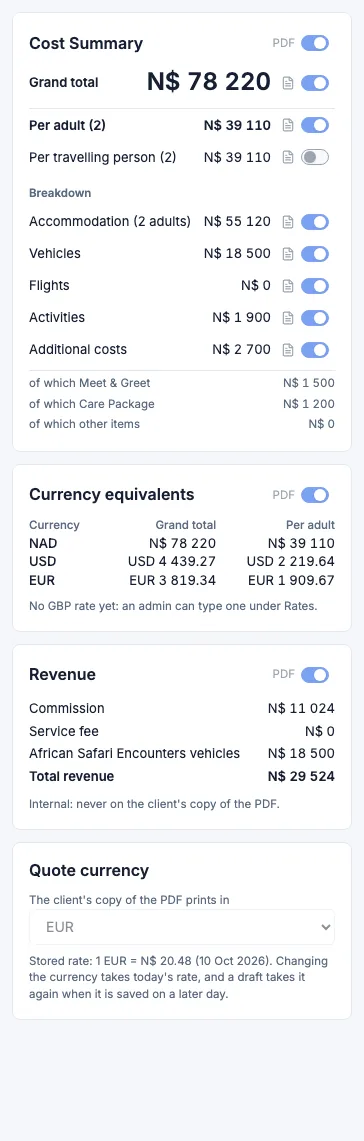
The grand total is this party on this costing. Quotes should come from it, then deposit and balance invoices. Change a child night and the total moves. Do not keep a shadow total in the mail.
The amount per adult is what most consultants send, because travellers compare. It is only as sound as the party you entered. If someone leaves, rebuild before you repeat it. Say what it assumes: this rooming and this vehicle. It is not an open seat at a fixed number.
The breakdown is how you answer a parent who asks why the children did not halve the trip. The vehicle, the guide and some fees do not halve. Accommodation, vehicles, activities and additional costs should stay separable for the office.
Each amount keeps the exchange rate of the day, so you can show equivalents without retyping the camps. Internal revenue is yours, not the client's. Child rates plus a full vehicle can leave a guide day looking thin. If it is thin, change the plan rather than hiding a cut in the adult rate.
When you would sign the summary, send the costing PDF, or the proposal, not retyped numbers. Use day by day costing for lodges, vehicles and activities at negotiated rates, with totals per adult, other currencies and a PDF ready to send. Plans are on the pricing page.
What the family should be able to read
Commission can stay off the first page. The assumptions cannot.
- Who travels, with ages.
- The route, day by day, with drive times.
- Whether the vehicle is private to this party, and who shares rooms.
- What is reduced for children, and what is not.
- What is excluded.
One click turns the costing into the client's web page: a route map with drive times, lodge photos and a day by day story, in your brand. A PDF comes with it.
On Pro and Max, clients never see Safari Studio on the proposal. Lite adds a small Powered by Safari Studio line. Logo, colours and four theme presets cover proposals, quotes, invoices and the client form. Set them in branding.
Keep the thread on the deal. Synced mail sits in one list, linked to the client and the deal. Gmail syncs both ways, and other mail can arrive through a forwarding address. Needs reply flags stop a child rate question waiting out a hold. The numbers you send should come from the costing. Use the inbox for that, not a personal folder.
A quote from the costing becomes a deposit invoice and a balance invoice, in any currency, with a card payment button. Payments are tracked on the deal. Late payments can be grouped by how late they are, which you can see with quotes and invoices.
A habit the office can repeat
Write the party before the price: adults, children, ages, who shares. Name the vehicle pattern and cost that unit, whether it is private days or seats. Enter each night on the season rate, with the child rule and the commission. Add activities only for people who will do them. Read grand total, amount per adult, breakdown, currency equivalents and internal revenue before you write the mail. Hold the rooms you costed. Assign the vehicle so a clash shows now. Send the PDF or the proposal.
If rooming changes, change the nights and the hold together. Stalled deals and unanswered mail can be flagged on the deals board, which matters when a second household is slow.
Do not cut the adult rate because the children felt dear. If internal revenue is thin, change the route or the vehicle. Do not keep a full-vehicle price after the group shrinks, unless you have said the vehicle is private and the price stands.
For example, two adults and two children, one vehicle, a city night and two camps. Use the hotel rule, then each camp's sharing rule for that season. If age means another room, add the room and the hold. Do not average the camps. If another adult joins, check the seats before you promise the same car.
The next enquiry that names a child
Start with the party and the season. Cost the vehicle as the contract works. Read the amount per adult only when the grand total is one you trust. Send the PDF or the proposal, chase the holds, and look at internal revenue before you sharpen the price.
You can book a demo or start a free trial. The trial needs no card. Bring a family file or a small group. The per adult amount, the child nights and the shared vehicle should sit in one costing you would send.