

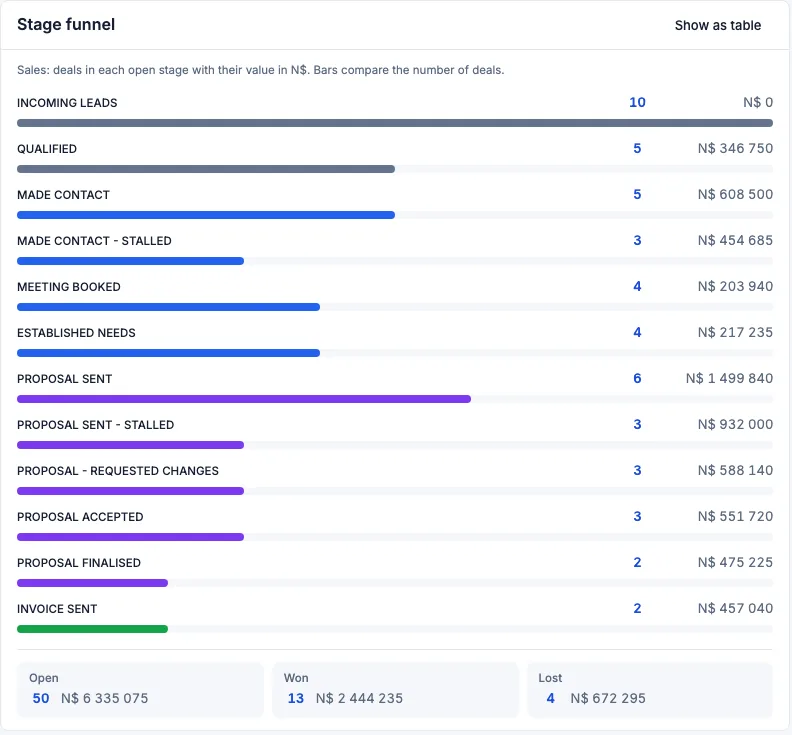
A safari operator travel agent relationship is a commercial partnership, not a one-off note in an inbox. The agent brings the guest, expects a clear net rate or a commission you can both explain, and needs updates they can pass on without chasing the desk. If the rate lives in one consultant's memory and the hold lives in a lodge's email, the next person on shift cannot say what was agreed, or what the agent has already been told. This article sets out what a CRM should track so commission, net rates and those updates stay on the trip.
Why a safari operator travel agent record is different
A direct guest writes about their own holiday. An agent writes about someone else's, and will write again about a different party. The record has to outlast one thread, because the commercial relationship does.
You need two identities, kept distinct. The agent is who you price, update and settle with. The travelling party is who the nights, the vehicle and the activities are for. Dates, party size and interests belong on the deal. So does the arrangement: net rate, rack rate with commission, or a blend agreed for this departure only.
For example, a DMC in Cape Town might take a direct enquiry from a couple heading to the Kalahari and, the same morning, a request from a long-standing agent for a family who want the Okavango. Both need camps and a vehicle. Only the agent booking needs a buy price, a decision on who is invoiced, and a selling piece the agent can show without exposing terms the guest should not see.
Treat the agent as a client you will meet again, and the trip as the deal. In Safari Studio, mail from every synced mailbox sits in one list, each thread linked to its client and deal. Website enquiries arrive as new deals, so nothing waits in a folder. Gmail syncs both ways. Any other mail provider can come in through a forwarding address. Needs reply flags show who is still waiting. Email templates and signatures exist for every person and every mailbox, which helps when an agent writes to a named consultant who is out on the road.
Agent mail left in a personal inbox is invisible to the owner and to whoever is covering leave. A booking can be priced correctly and still go wrong if the only person who saw a camp change is away. The inbox keeps each thread with the client and the deal, so the change and the reply stay with the trip.
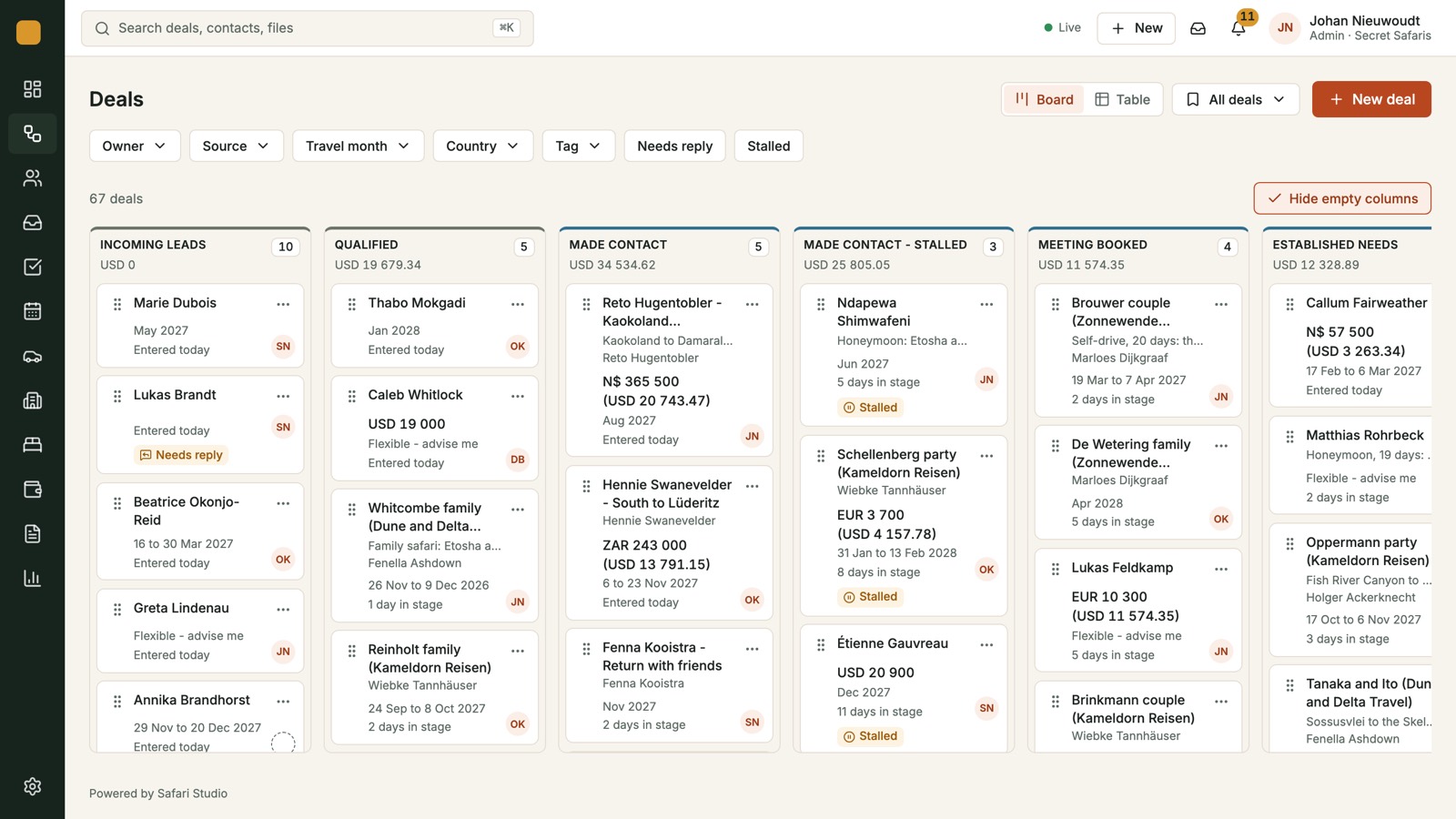
On the deals board, enquiries sit in columns you drag through your own stages. Each card shows the client, the travel dates and the value in its own currency, with the USD equivalent, and how many days it has been in that stage. Stalled deals and unanswered mail are flagged. Any currency is accepted, with its value at the day's rate. The website enquiry form feeds the board, and two-way Gmail sync keeps every reply beside the trip it belongs to.
Days in stage shows which agent to call first.
Commission, net rates and the figure the agent will act on
Agents do not all buy the same way. Some want a net rate and will add their own margin. They may never tell you what the guest pays. Some expect a published rate and a commission, paid when you have the money or after travel. Some have a standing percentage. Others negotiate trip by trip, when the stay is long or the week is quiet. A few deals are mixed: net on camps you contracted specially, commissionable on the rest.
Record the agreement where anyone opening the trip will find it. A CRM for this work should hold:
- Whether the price sent is net or commissionable
- The rate or the net figure, and the date you agreed it
- What it applies to: ground package only, or also park fees, regional flights and pass-through items
- When any commission is due: on deposit, on balance, or after the guest has travelled and you have been paid
- Who is paid, if the consultant, the agency accounts office and a host agency are different desks
Usual commission is not an agreement. Green season and peak often differ. A series may differ from a trip for two. If you matched a rate to win a departure, write that on the deal, or the next quote will copy the exception and call it policy.
Safari Studio will not agree those terms for you. It keeps the costing, the currency and the payments on the same deal as the agent's emails, which is where that percentage has to be read.
Costing is built day by day with lodges, vehicles and activities at the rates you negotiated. Each amount is stored with the exchange rate of the day, so the margin stays right when rates move. Totals can be shown per adult and in other currencies. A costing PDF is ready to send.
For example, a lodge operator in the Okavango may contract camps in US dollars and quote an agent in euros. If the euro total lives only in an email, a later move in the rate changes the margin with nobody noticing until an invoice is questioned. The rate stored with each amount is what lets you explain the price, including after you re-cost because a camp is full.
Re-cost before you reassure the agent. A substitute lodge at a different contracted rate changes the net, and it can change whether a commission percentage still makes sense. Agents can explain a new total. They remember an operator who surprises them on the final invoice.
The story the guest reads, and the price the agent approves
Once the costing is settled, one click turns it into a web page for the client: a route map with drive times, lodge photos and a day-by-day story, in your brand, with a PDF alongside. Drive times sit between every stop. Lodge pages carry their own photos. That route map and day-by-day proposal is what an agent can forward when a guest asks what the days look like.
Keep the net off that story unless you mean the guest to see it. The quote, made from the costing, is the price the agent acts on. Because quote and costing share the same days, lodges and activities, the PDF in the agent's hands does not drift from the file you will operate.
Your logo, colours and theme go on every proposal, quote, invoice and the client form. There are four theme presets. On Pro and Max, clients never see Safari Studio on those pages. Lite adds a small Powered by Safari Studio line. If an agent will forward the page, know which plan you are on. Plans are on the pricing page.
Quotes become deposit and balance invoices, with a card payment button, and every payment is tracked against the deal. Invoices can be in any currency. Late payments are grouped by how late they are. You see what is owed and what is paid, with no spreadsheet to maintain.
That payment record is how you tell whether commission is due. If you pay commission only once the balance has cleared, look at the invoice, not at a bank alert someone may have missed. If the agent paid a net and collects from their own client, there is nothing to add on top. The deal should say which arrangement applies before an invoice goes out.
What to show the agent, and when
Most agent frustration is ordinary. A hold expired and nobody said. A lodge changed the room and the news stayed in one mailbox. The balance date passed and the agent heard it from the guest. The fix is a status the whole desk can see, and a note to the agent when it changes.
In roughly this order, an agent needs:
- A first reply confirming dates, party size, and net or commissionable
- A proposal they can forward, and a quote they can approve
- Hold status: requested, held and until when, confirmed, or released
- Any change of camp, vehicle or price, with the new total, before you treat silence as a yes
- Deposit and balance: what is in, and what is still due
- Final details: meeting point, vehicle, and anything the guest still owes you
The holds board covers the room line. Every room you ask a lodge for sits there: requested, held with an expiry date, confirmed or released. Hold requests go to each lodge from the deal. Before a hold runs out, a chaser email is ready, so nothing lapses quietly. When an agent asks if the rooms are held, you can give a date.
Tell the agent before a hold expires if you need a decision to keep it. A full camp will not wait because your email is still open.
Once the trip is confirmed, do not promise a private vehicle the fleet cannot field. On the fleet timeline, every vehicle has one row, trips appear as bars across the dates, and services and blocked days sit on the same line. Assign a car to the trip and a clash shows before it happens. The standard to protect is simple: no 4x4 booked twice.
Stage should be something you could say to the agent without translating it.

The bar runs from Incoming leads through Proposal accepted to Tour completed. Drag the deal as the work changes. You can use your own stage names, including one for awaiting the agent's confirmation. A colleague should see, from the column, whether the agent is waiting on you, you are waiting on the agent, or the trip is sold and still to be operated.
Reports show deals and their value per stage, including a pipeline weighted by each stage's probability, and a funnel with median days in each stage. If agent proposals linger, the wait is visible.
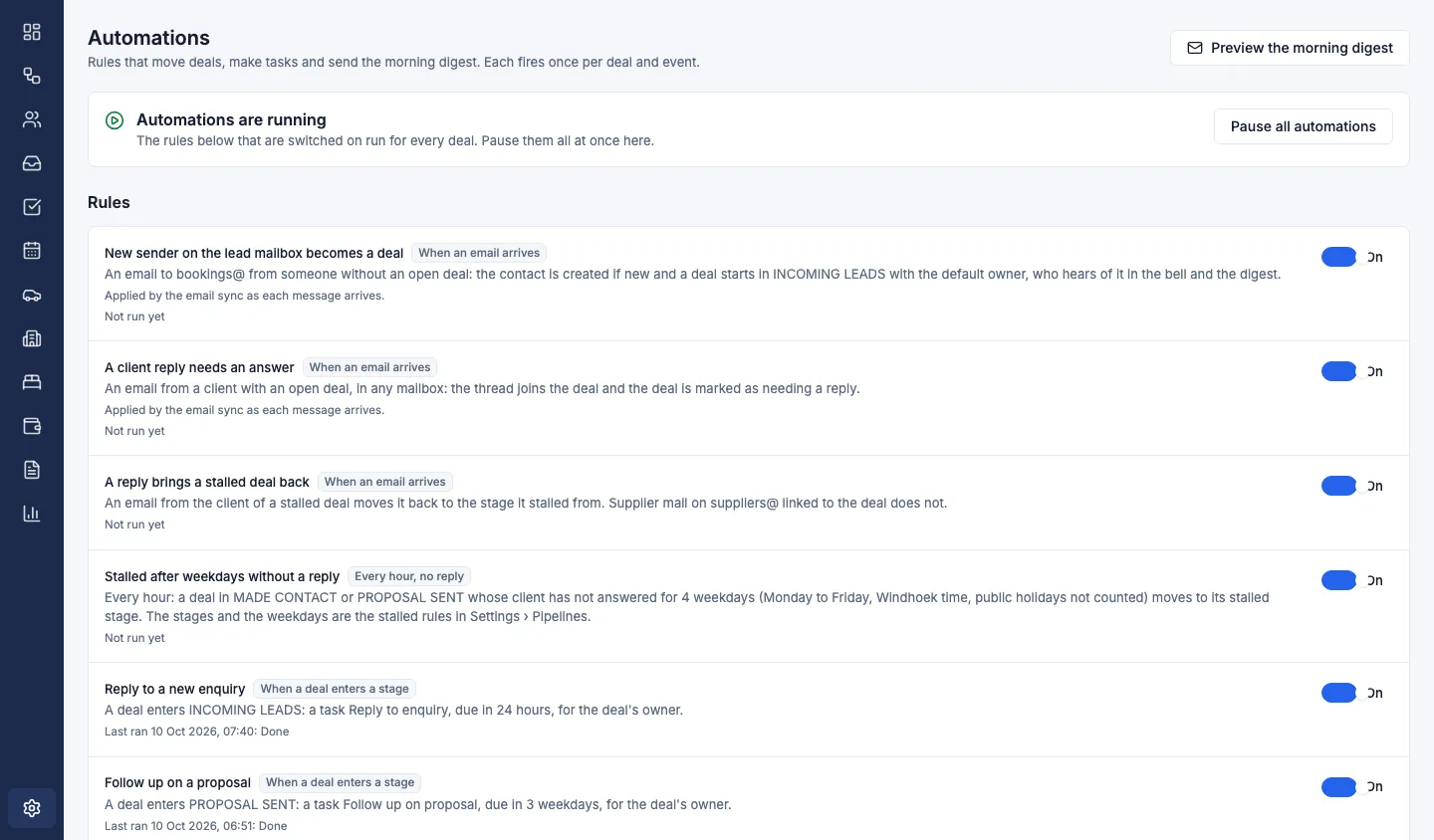
Those rules can turn new emails into deals, flag replies, move stalled deals and create follow-up tasks. A follow-up task after a proposal is often enough to ask if the hold should be released. Do not automate the judgement. A rate question or an unusual camp still needs a person who knows the contracts. Put that person in front of the emails, the costing and the hold, not in front of a blank reply.
When the deal reaches Tour completed, check what has been paid before you discuss commission. Net bookings and commissionable bookings should not be settled the same way out of habit.
A check before the quote goes out
Before you call an agent enquiry quoted, confirm the commercial picture sits on the trip.
- Agent and travelling party are distinct, and you know who is invoiced.
- Net or commissionable is stated, with the rate, what it covers, and when commission is due.
- Costing uses negotiated rates, with the exchange rate of the day on each amount.
- The quote matches that costing, in the agreed currency.
- The proposal is in your brand, and you know whether a Safari Studio line will show.
- Holds have an expiry you can name, and no vehicle is promised twice.
- A reply is flagged if owed, and a follow-up exists if the agent goes quiet.
Safari Studio is built for safari operators, DMCs and the travel agents who sell their trips.
If you want to see how an agent enquiry sits with its costing, quote and payments, book a demo or start a free trial.