

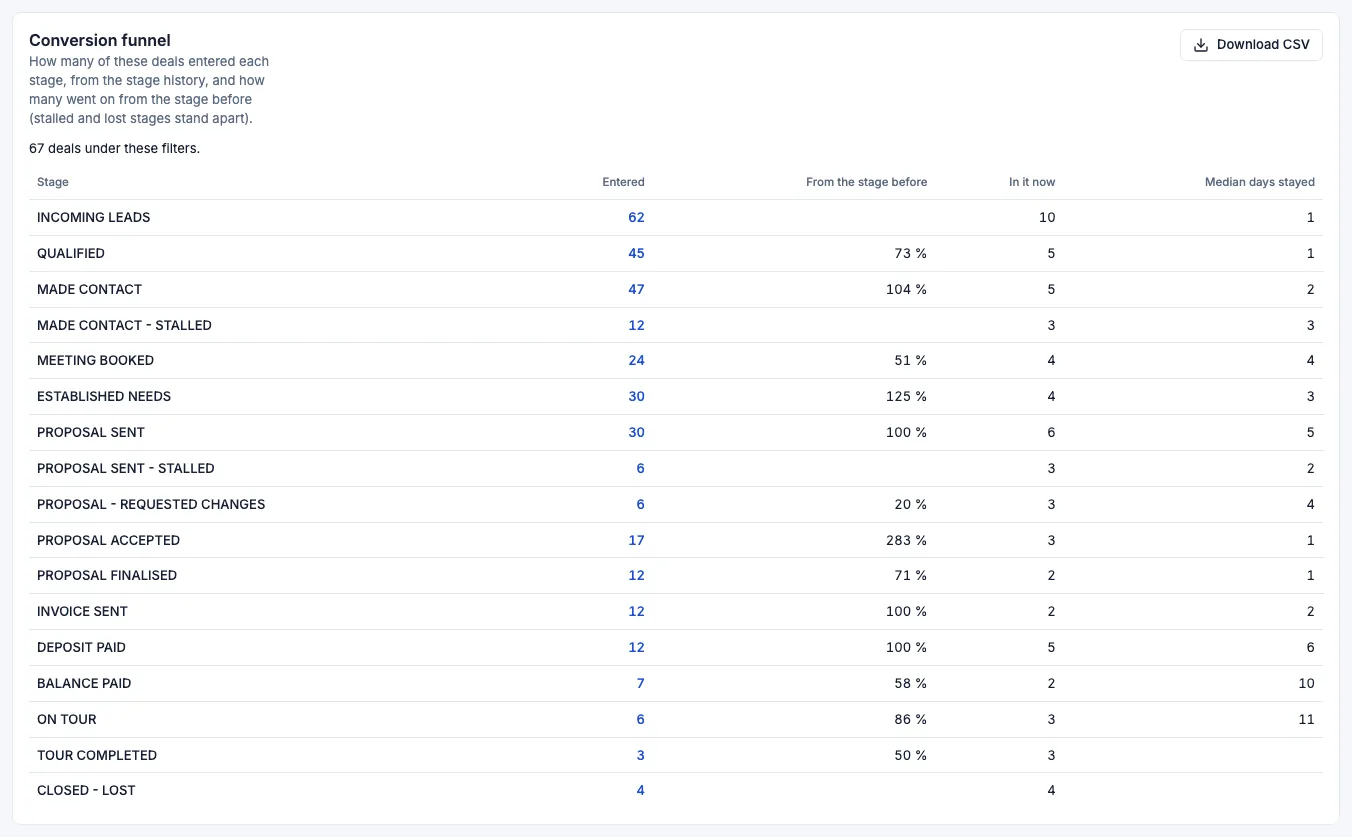
A client rarely buys a safari from a rate sheet. They buy it from the page you send: the stops, the nights, the drives, the lodges and the price, in an order they can follow. That page is what safari proposals for travel agents have to be. Not a file you forward and hope. A page you can talk through on a call, and that still makes sense when the client reads it alone later.
You are the person the client trusts. The operator or the DMC holds the rooms, the vehicles and the rates. A good partner proposal respects both jobs. It gives you enough to sell with confidence, and it does not make you rebuild the trip before you can put your name to it.
If you resell safaris, you already know the awkward middle. The partner sends something thorough in their brand, or something thin that assumes you will fill the gaps. The client wants one clear page. Your job is to know what that page should contain, and to produce it when the version you received is not the one you want to send.
What safari proposals for travel agents should contain
Before you admire the photographs, check whether the proposal answers the questions a client asks first.
Where do we sleep, and for how many nights at each stop? How do we move on, and how long does that take? What are the travel dates? What is the price, and in which currency? What is included, as lodges, vehicles and activities, rather than one vague line?
If those answers are missing, you spend the call reconstructing them. That is where small mistakes appear. A night is counted twice. A drive is called short when it takes most of the day. A price from last month is treated as if it were still right.
For example, an agent selling a two-week combination might receive a partner file that lists lodges in order but never says whether the client flies or drives, or how long the transfer takes. The client asks a fair question. You guess, or you pause the call to write to the partner. Neither feels like care.
There is a second test. Could a colleague send this if you were out? If the answers live only in your head, the trip is fragile.
Safari Studio is a CRM for safari operators, DMCs and the travel agents who sell their trips. It is sold as a monthly, quarterly or yearly subscription, with a free trial and no card needed to start. From a costing, one click makes the client's own web page: a route map with drive times, lodge photos and a day-by-day story, in your brand. A PDF comes with it. Those client proposal pages let you send a link or a file without retyping the trip.
The same record can hold the mail, the deal and the holds. When the client says yes, the invoice can come from that record too. The proposal is not a brochure you will struggle to match later. It sits on the trip.
A route the client can read without a phone call
Clients do not think in supplier codes. They think in nights, and in the shape of the journey. A proposal should show the route at a glance: each stop, how many nights, and the drive time onwards. Travel dates belong on that same view, next to the price, so nobody matches a total to the wrong departure.
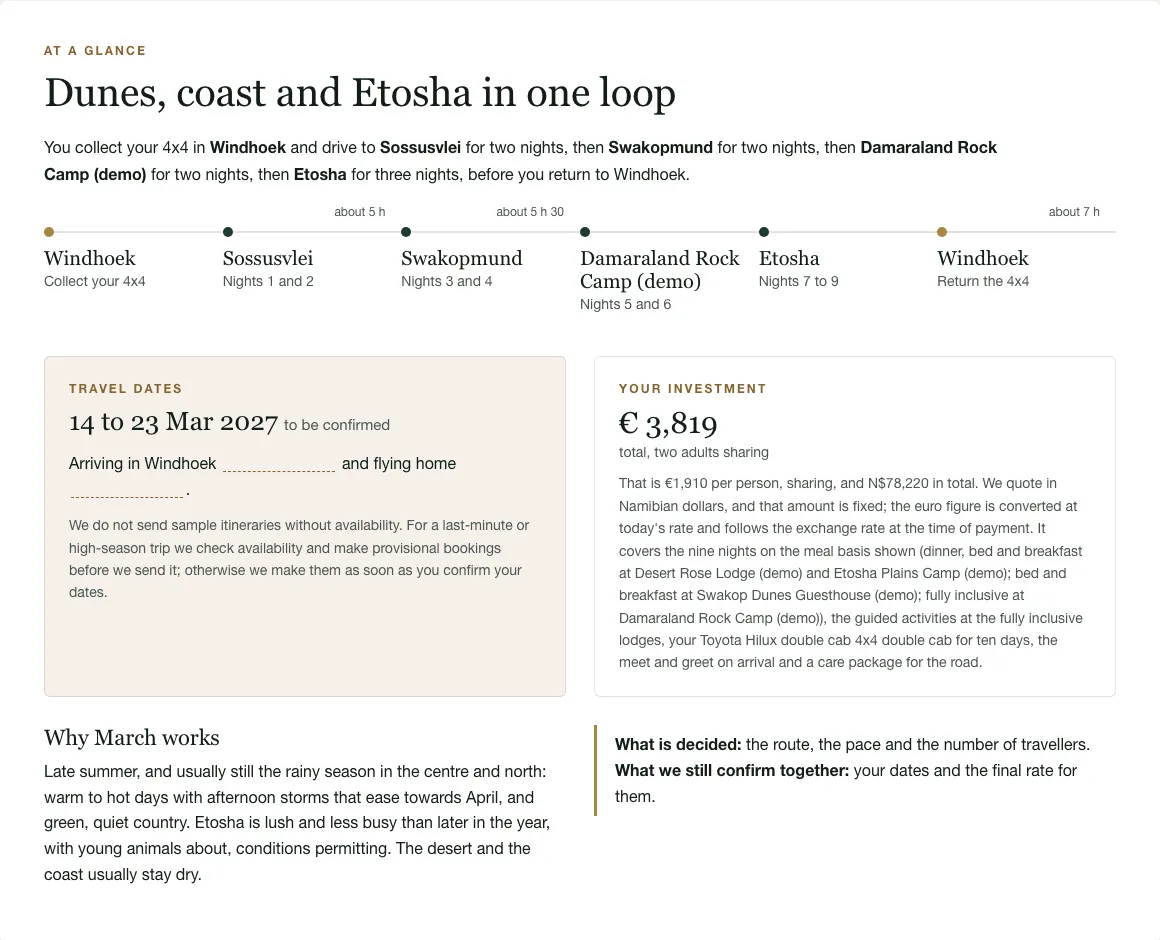
Drive times between every stop matter more than a polished introduction. A family with young children will accept a long gravel road if they know about it before they pack. They will not accept finding it out on day six, when the plan cannot change without cost. You cannot advise them if the proposal hides the hours.
A map helps when the names are unfamiliar. Numbered stops, in order, with the drive times beside them, let a client trace the journey. For example, a self-drive loop reads differently once the client can see that it returns towards the start, rather than ending in a town they must then leave by a flight you have not mentioned.
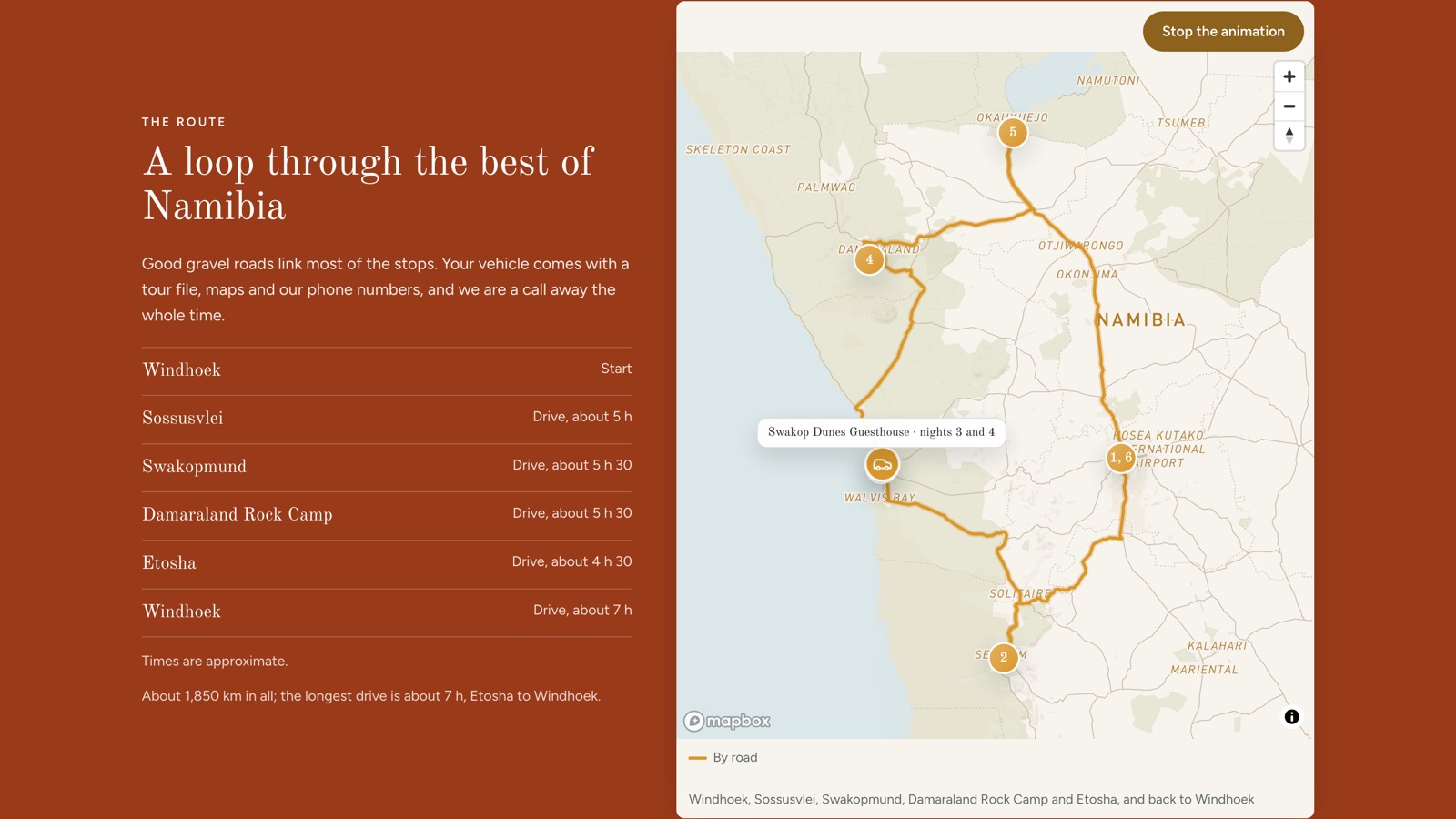
When you build this in Safari Studio, the map and the drive times come from the trip you have already costed. You are not drawing a route in one tool and pricing it in another. If a stop changes, the page the client sees can change with it. Send the current page, and a fresh PDF if they want a file to keep.
Expect the same from a partner. A table of lodge names and a single total is not enough to sell from. Ask for the route in a form the client can follow.
Lodge pages, not a list of names
A lodge name means little to someone who has not been there. Two nights at a camp does not say whether the client will sit by a pool at dusk or sleep with the bush close by. The proposal should give each stay its own page, with its own photos, so the client looks at the place rather than at your covering note.
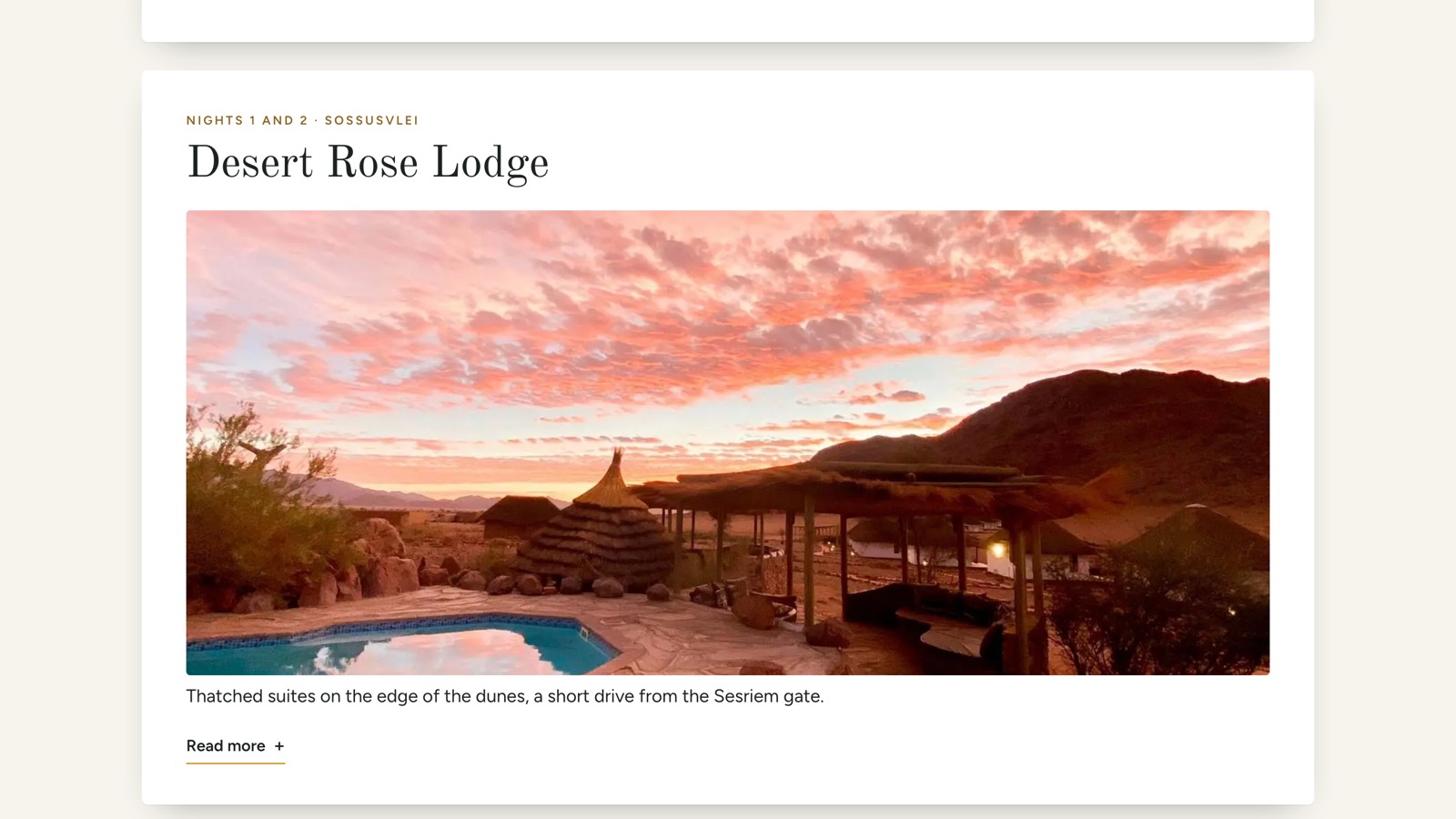
Photos do a job that adjectives cannot. Lodge pages with their own photos are a fair thing to expect, and they are part of a proposal made in Safari Studio.
Beside the photos, the day-by-day story turns a list of bookings into a trip someone can pack for. You do not need florid copy. You need a sequence: which mornings start early, which days are mostly in the vehicle, which evenings are quiet. Write that story from the costing, not from memory.
In Safari Studio the costing is built day by day, with your lodges, vehicles and activities at the rates you negotiated. The proposal is that same sequence, shown to the client. When the story and the price come from one record, you are less likely to describe an activity you forgot to cost, or to charge for one the text never mentions.
For example, a consultant reselling a walking trip might want the client to see the camp, then read that two days are on foot and one day is a rest. That short note prevents a larger conversation later, when the client arrives expecting a vehicle they were never going to have.
Price, currency and the costing behind them
The price on the proposal should be a number you can stand behind. The client will ask what changes if there are three adults instead of two, or if they would rather see the total in their own currency.
Safari Studio keeps the costing on the trip. Each amount is stored with the exchange rate of the day, so the margin stays right when rates move. You can show totals per adult, and in other currencies. A costing PDF is ready to send when a colleague or a partner needs the working figures, rather than the client page.
The client page carries the price, the dates and the route. The day by day costing holds the lodges, vehicles and activities at the rates you negotiated, so you are not keeping a second set of figures. Any currency can sit on the deal, with its value at the day's rate. The number on the proposal is tied to a rate you stored.
Holds, so the dates are real
A clear proposal with no rooms behind it is only a suggestion. Expect a partner to say what is requested, what is held, what is confirmed and what has been released, and to give you an expiry. A hold with no date is how space disappears between two inboxes.
On the holds board, every room you ask a lodge for is requested, held with an expiry date, confirmed or released. Hold requests go to each lodge from the deal. Before a hold runs out, a chaser email is ready to go, so nothing lapses quietly. If you are the one requesting holds, record them before you send the page. If the partner is requesting them, ask for the expiry with the proposal, not after the client has said yes.
Your brand on the page the client keeps
The client is buying from you. The page they forward to a partner or a parent should carry your logo and your colours, not a look you would not put on your own invoice.
Safari Studio puts your logo, colours and theme on every proposal, quote, invoice and the client form. Four theme presets mean you are not designing a layout for each trip. On Pro and Max, your clients never see Safari Studio anywhere on them. Lite adds a small Powered by Safari Studio line. See what each subscription includes on the plans and prices page.
Set the brand once, and each new proposal should pick it up. If a partner's file is clear on the route but carries their name, you can still publish the client page in yours, from a costing you trust.
After the client says yes
When the client replies, the note should sit on the deal. Mail from every synced mailbox is in one list, each thread linked to its client and deal, with needs reply flags so nobody waits unseen.
When they agree, do not retype the trip. Quotes are made from the costing, then become deposit and balance invoices in any currency, with a card payment button. Every payment is tracked against the deal, so you can see what is owed and what is paid without a spreadsheet to maintain.
If you want to see a costing become the page a client can keep, book a demo. If you would rather try it on your own enquiries, start a free trial. No card is needed.