

A destination management company does not sit down one morning and choose a spreadsheet. The file is already there, a colleague can open it, and a new column takes a minute. Years on, that file, or a small family of files, is how the office remembers who is travelling, which camp is held, and which invoice is still open. The hours do not vanish in a single failure. They leak out in repeated jobs: an enquiry pasted into a row, a hold date typed into a second file, a vehicle checked on a third tab, a deposit chased from a fourth. If you are weighing that habit against a dmc crm, the useful question is not which screen has more menus. It is where the time goes on a normal week, and whether one record of the trip can carry the work your team already does by hand.
The working day, told in files
Picture a Tuesday in high season, when the book is full and nobody has a spare hour for tidying files.
The person on mail has more than one inbox open. The info address, a personal mailbox and a bookings alias do not share a view. A website enquiry arrived overnight. Another came as a forward from an agent who has already promised the client a reply. Before anyone can answer with a real price, someone copies names, dates and party size into the master sheet. The copy is a task. It is also where a detail slips: a child age, a preferred room, a note that the group will not drive after dark.
By late morning the sheet has a status column: incoming, quoted, holding, confirmed, lost. It holds until two people update the same rows, or a reply lands in a mailbox the sheet does not know. Who owes an answer becomes a walk across the office. Stalled trips sit there until someone remembers to filter.
After lunch the work splits. Lodge holds live in threads with the camps. Expiry dates live in a column, a paper diary, or a reminder that belongs to one person. If that person is out, the hold can lapse with no chaser sent. The costing sits in its own workbook: lodges in one place, vehicle days in another, activities in a list that was right when it was built.
Late afternoon is money. Deposit invoices went out from a template, and payments were marked in another sheet that does not know the trip. Someone reconciles by eye. The latest truth is split across tools that do not share a record.
The minutes usually sit in the same places:
- Copying an enquiry out of mail and into a row
- Finding who still owes a reply
- Checking a hold expiry somewhere else
- Rebuilding a total after a rate moves
- Confirming a vehicle is actually free
- Matching a payment to the right trip
None of these jobs is difficult. Together they are a large part of the week.
What spreadsheets still do well
A spreadsheet is a good scratch pad, and it is worth saying so before a switch. You can add a column this afternoon. An accountant can open a file without a new login. A lodge can send a rate card as a grid, and you can sort it. For a one-off comparison, or a private list the office does not need to share, a sheet is often faster.
The strain starts when the sheet becomes the record for live trips. The work is a thread of mail, dates, lodges, a vehicle, a hold that expires on a named day, and an invoice that should match the accepted quote. Those pieces change on different days, often edited by different people. A grid can store any one of them. It will not notice an owed reply, a hold that runs out tomorrow, or the same vehicle promised twice.
Teams cover the gap with colour codes, a Friday tidy, and a rule that only one person edits the master. That helps until someone is away, or a new colleague cannot tell which file is current.
If one person answers every enquiry, holds are rare, and you run a single vehicle, a well kept sheet may still be enough. Look harder at a switch when several people touch the same trip, and when a missed reply, a lapsed hold or a double booked vehicle would cost more than the hour spent preventing it. A tour operator, or an agency selling the trips, will recognise the same pattern.
Where a dmc crm takes the repeat work off the trip
Safari Studio is a CRM for safari operators, DMCs and the travel agents who sell their trips. It is sold as a monthly, quarterly or yearly subscription, with a free trial and no card needed. For a desk leaving spreadsheets, the gain is not a longer menu. The enquiry, the costing, the holds, the vehicle and the invoice can sit on the same deal, so the trip is not copied from file to file.
Mail is usually the first leak. In the inbox and enquiries view, mail from every synced mailbox sits in one list, and each thread is linked to its client and deal. Gmail syncs both ways. Any other mail provider can come in through a forwarding address. Website enquiries arrive on the deals board as new deals, so nothing waits in a folder. Needs reply flags mark threads that still want a person. Email templates and signatures exist for every person and every mailbox, so a greeting and a sign-off are not rebuilt on every note.
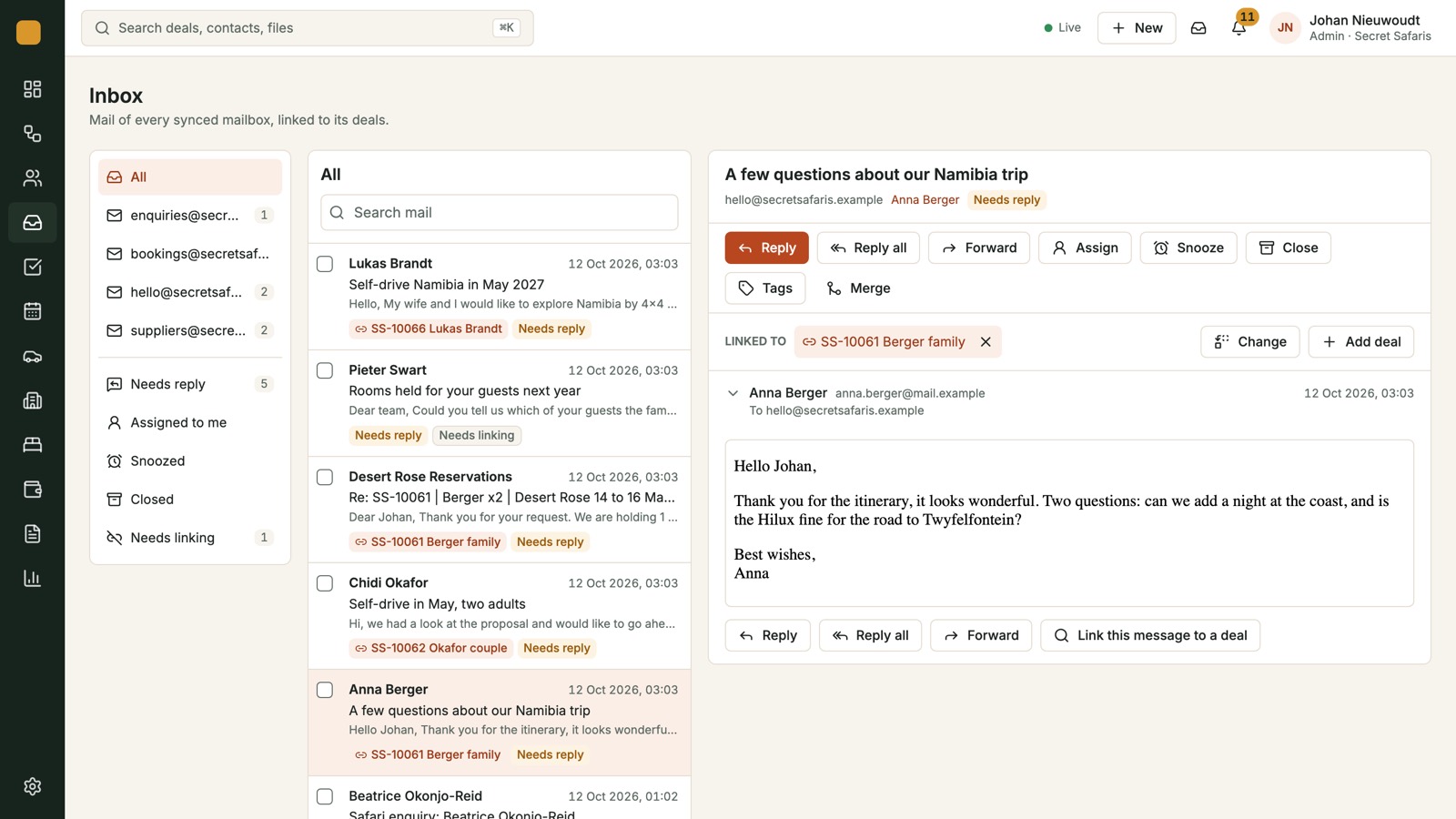
That link is a slice of the morning returned. You are not hunting through a mailbox to remember which trip a thread belongs to, and you are not pasting the same dates into a sheet so a colleague can see them.
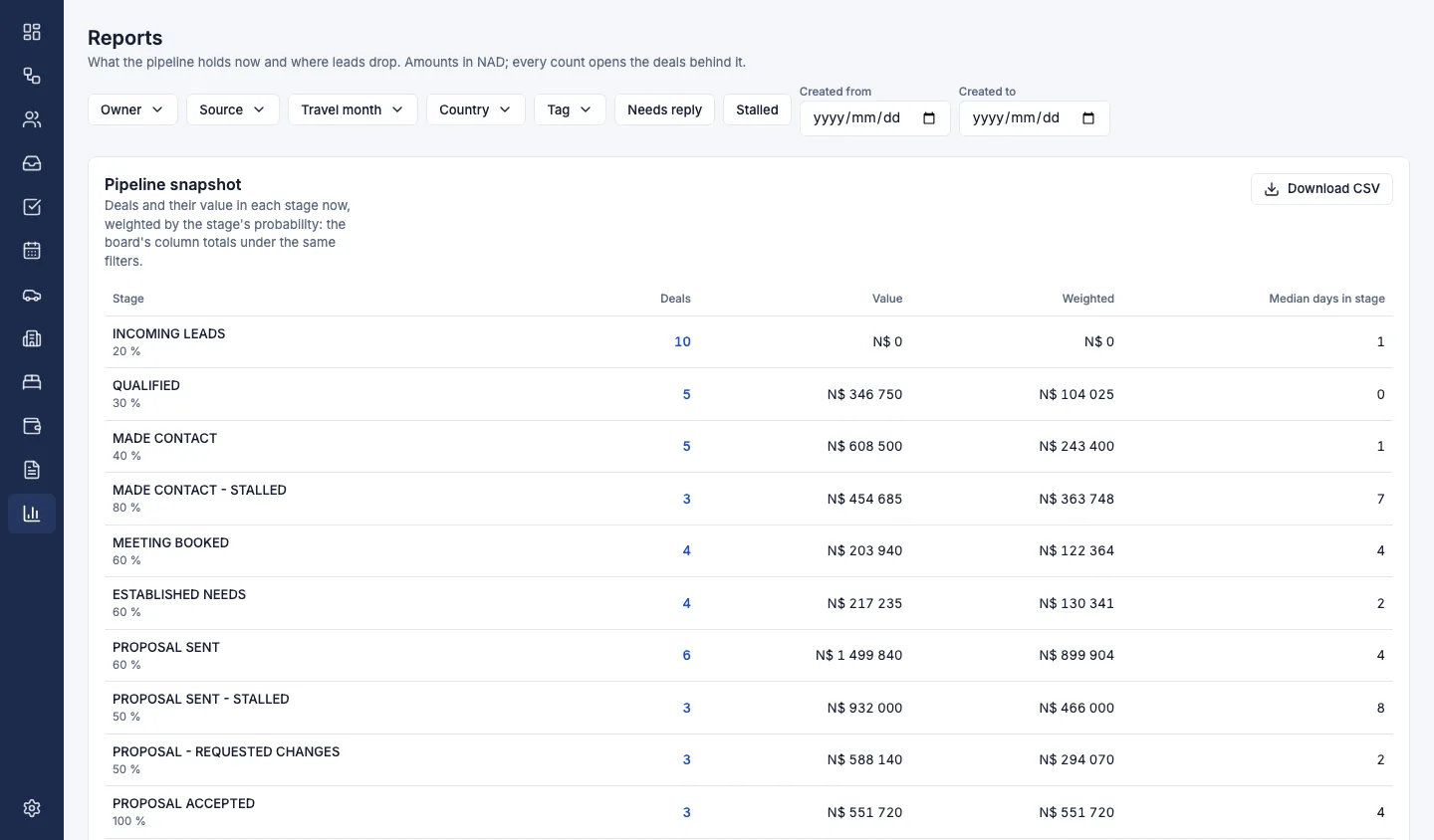
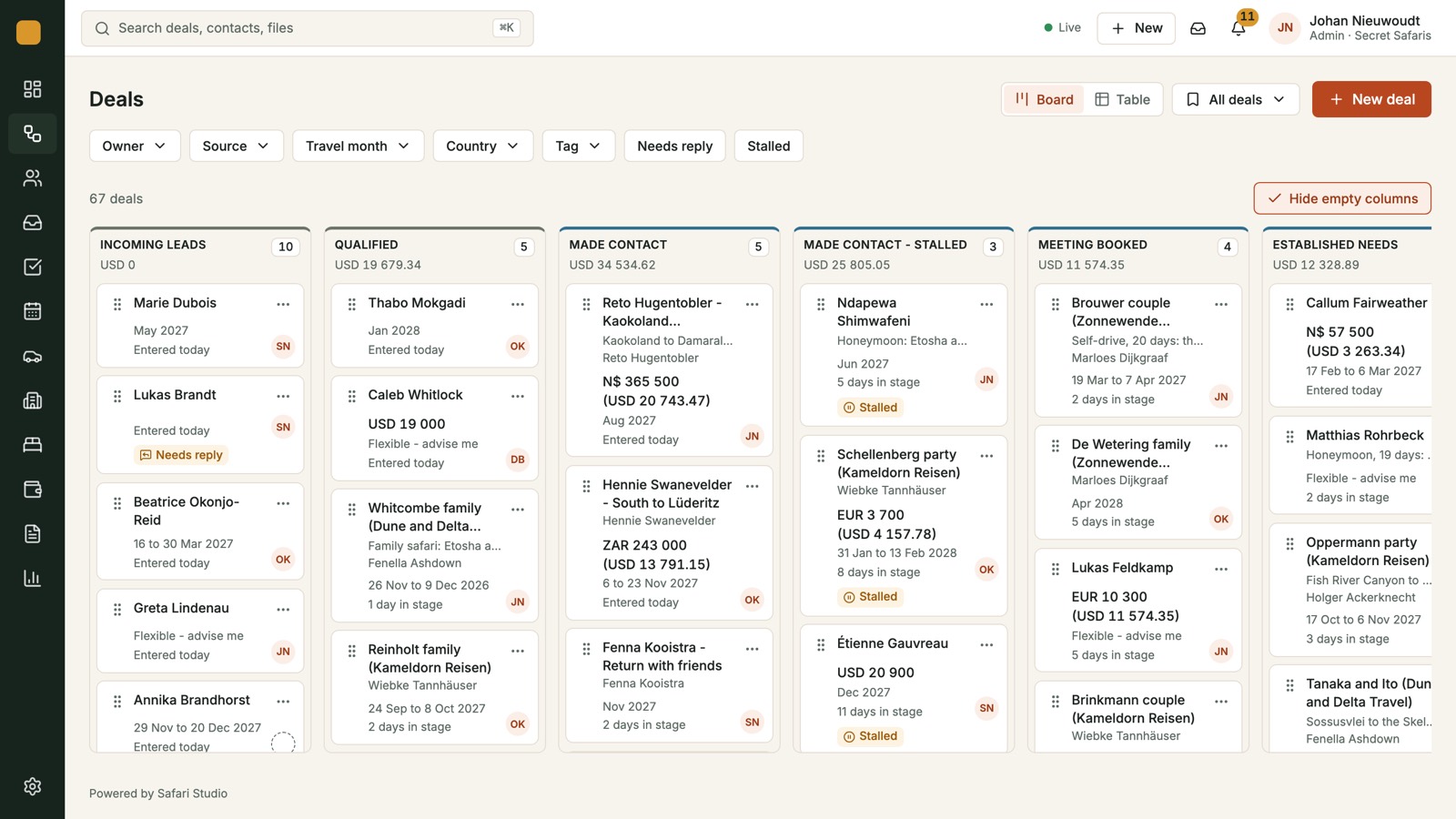
The deals board replaces the status column. The stages are yours, and you drag a deal through them. The card holds the client, the travel dates and the value. Stalled deals and unanswered mail are flagged, which is the end of day filter without the manual sort. Values can sit in any currency, at the day's rate, without a side table. Days in stage sit on the card, so you are not maintaining a date column and a formula.
Holds, vehicles and money on the same deal
Holds are awkward in a sheet because the date that matters also sits with the lodge. On the holds board, every room you ask for is requested, held with an expiry date, confirmed or released. Requests go to each lodge from the deal. Before a hold runs out, a chaser email is ready to go, so a quiet lapse is less likely.
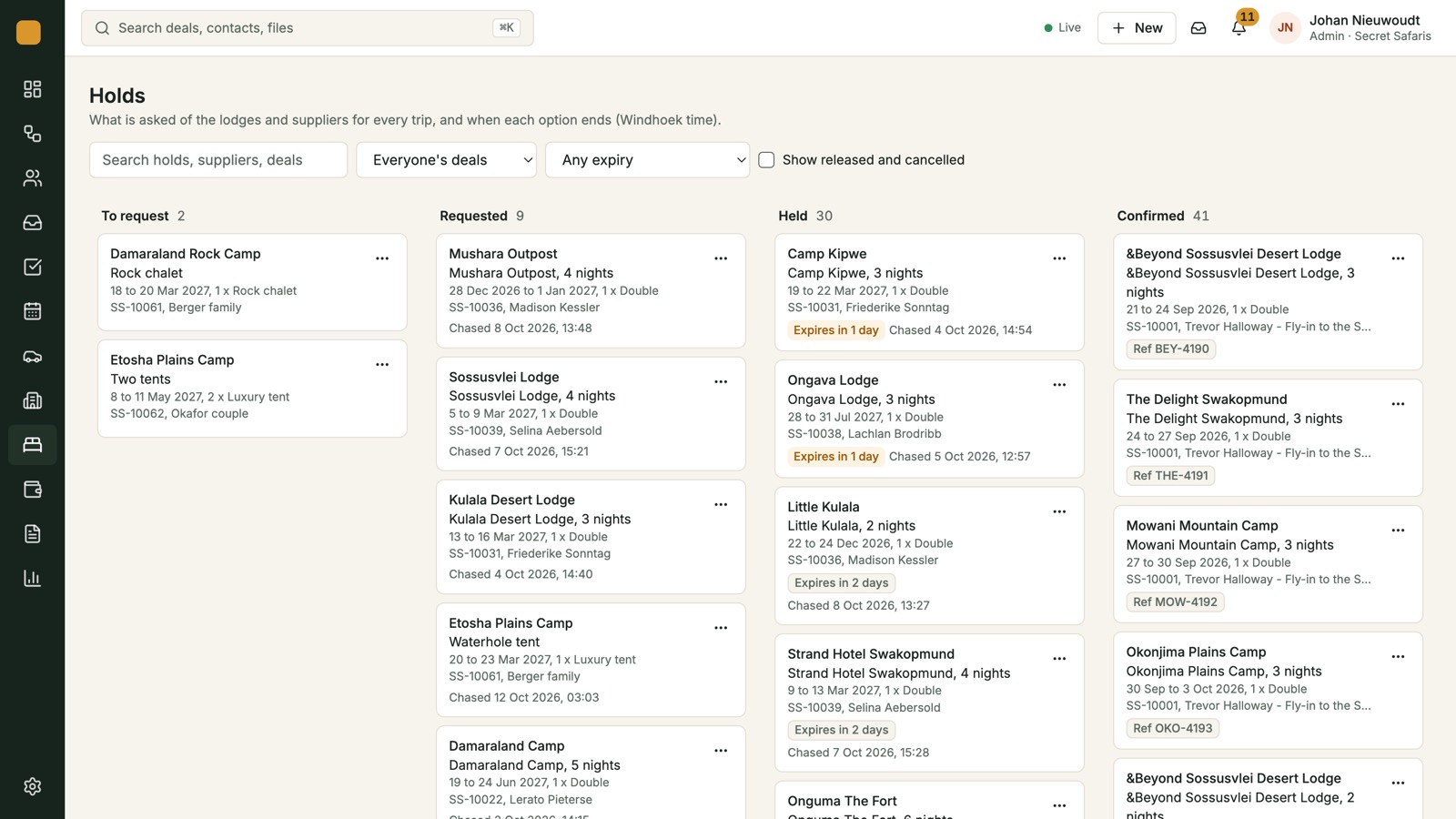
What you get back is the checking, not only the typing. The hold list, the mail and a separate reminder no longer have to be reconciled by eye. There is no second list to keep aligned with the quote.
A fleet tab is only as current as the last edit. On the fleet timeline, every vehicle has its trips, services and blocked days on one line. Assign a car and the clash shows before a 4x4 is booked twice.
Money is the file people update when the week slows, which is to say it often waits. Quotes, invoices and payments start from the costing, so the client figure is not typed out again in a blank document. Quotes become deposit and balance invoices, with a card payment button, and every payment is tracked against the deal. You see what is owed and what is paid, with no spreadsheet to keep up to date beside the books. Late payments are grouped by how late they are.
The courier work between files is what drops away.
One costing, then the page the client reads
Spreadsheet shops often keep the internal price and the client page as two files. A rate move means both must change, and one is easy to miss.
In costing, you build day by day with your lodges, vehicles and activities at the rates you negotiated. Each amount is stored with the exchange rate of the day, so the margin stays right when rates move. Totals come per adult and in other currencies, with a costing PDF ready to send.
One click turns that costing into a proposal page: a route map, drive times between stops, lodge photos and a day-by-day story in your brand, plus a PDF. Logo and colours, set in branding, apply to the proposal, the quote, the invoice and the client form. On Pro and Max, clients do not see Safari Studio on those pages. Lite adds a small Powered by Safari Studio line. The page is produced from the trip, not redrawn in another file. The wider set is on the Safari Studio feature pages.
How to weigh the switch while the season is open
Few DMCs have an empty month for new habits. Ask which repeat jobs eat the week, and whether a shared deal covers them.
For one week, note each copy from mail into a sheet, each missed reply, each hold checked twice, and each total rebuilt after a rate move. Do not turn those notes into an average. If the latest file was hard to find, a linked thread matches the problem. If lodge rates are unsettled, agree those first.
Use live trips on the free trial, which needs no card. Put open enquiries through the inbox and onto the board. Build one costing, request one hold, and assign a vehicle on a day you know is tight. Raise a deposit invoice from that costing and set it beside the figure you would have typed. Plans and prices are on the pricing page. Compare the hours, and read the prices there rather than here.
Keep the overlap short. From a date you choose, new enquiries start on the board, and the old sheet becomes history rather than a second master. Open deals, open holds and the vehicles in service now are enough. The tool will not write the client's reply or create demand in a quiet month. It can stop the desk adding delay of its own.
A plain way to decide
Set the week's notes beside the jobs above: mail copied into a row, holds chased from memory, vehicles checked twice, totals rebuilt when a rate moves. If several of those are ordinary work, a dmc crm is not an extra layer. It is a way to stop carrying the same trip from file to file.
You can walk a real enquiry through with us, or try the work on this week's mail. Book a demo if a guided look would help, or start a free trial if you would rather begin now, with no card needed.