

Unpaid invoices are rarely a surprise on the day they go overdue. They slip because the deposit sat in one email, the balance sat in another, and nobody had a single list of what was late. Good tour operator invoicing is the habit of seeing every open amount, knowing how late it is, and making it easy for the client to pay. This piece is about that habit: ageing, reminders, and card payments, for a tour operator, a DMC, or a travel agency.
The unpaid book is not one number
A tour company rarely has one kind of invoice. The deposit secures the trip. The balance should arrive before departure. In Safari Studio, quotes become those deposit and balance invoices, with a card payment button, and every payment is tracked against the deal. You raise the deposit invoice from an accepted quote, then the balance invoice when the balance is due.
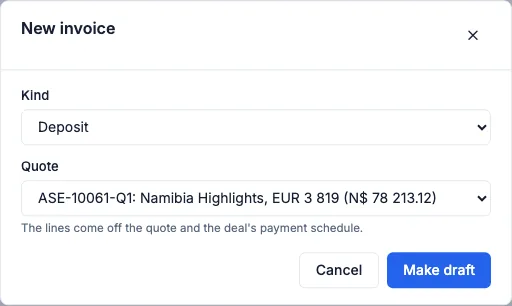
For example, a DMC in the Okavango may invoice a travel agency for a deposit while that agency is still invoicing its traveller. Two relationships, two due dates. If both live only in sent mail, each side remembers the invoice it last typed. The one that slips is often the one a lodge is waiting on.
Sell direct, and the same split appears. A client pays the deposit gladly, then meets the balance date beside visas, flights and a family calendar. A travel agency may already have paid a supplier, or promised to, while its own client has not paid. The unpaid invoice is money you may already have committed. You need a list, not a memory.
What ageing is for
Ageing groups what is owed by how late it is. Due next week is not the same problem as due last month. Both sit on the list. They do not get the same note.
On the Money screen, what clients owe is grouped by how late it is. Open invoices show their status and due dates. You are not rebuilding that view each week, and there is no spreadsheet to keep in step.
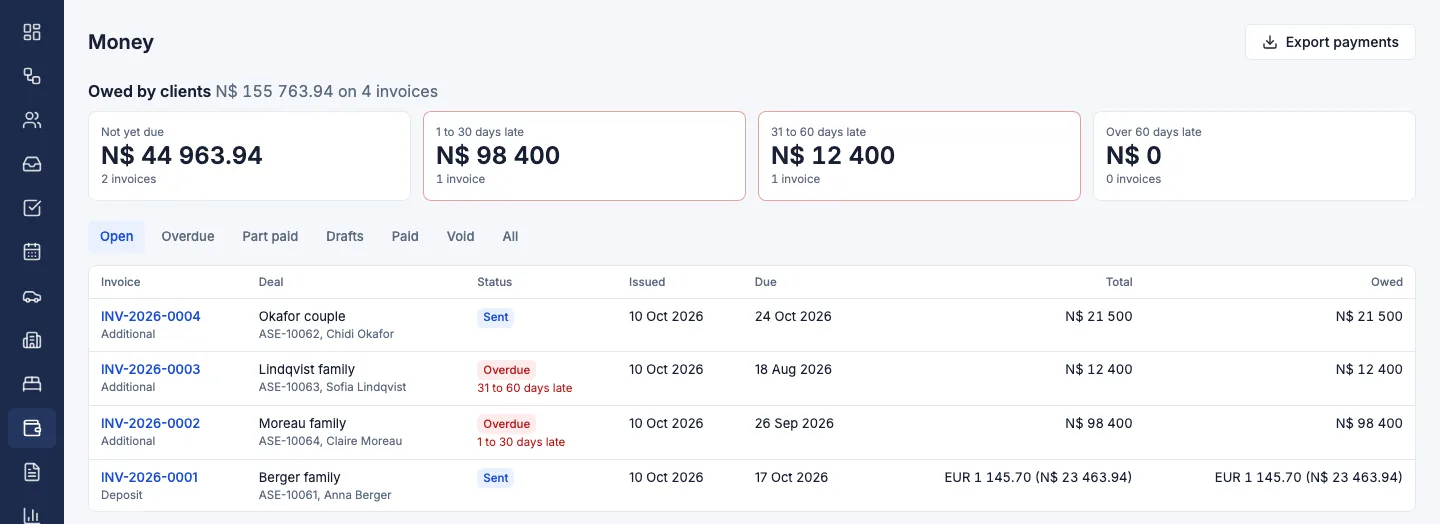
Look at what is late first. Late does not always mean someone is avoiding you. The invoice may have been clear to you and muddy to them: which trip, which travellers, deposit or balance, which currency, and how to pay. Read it before you write.
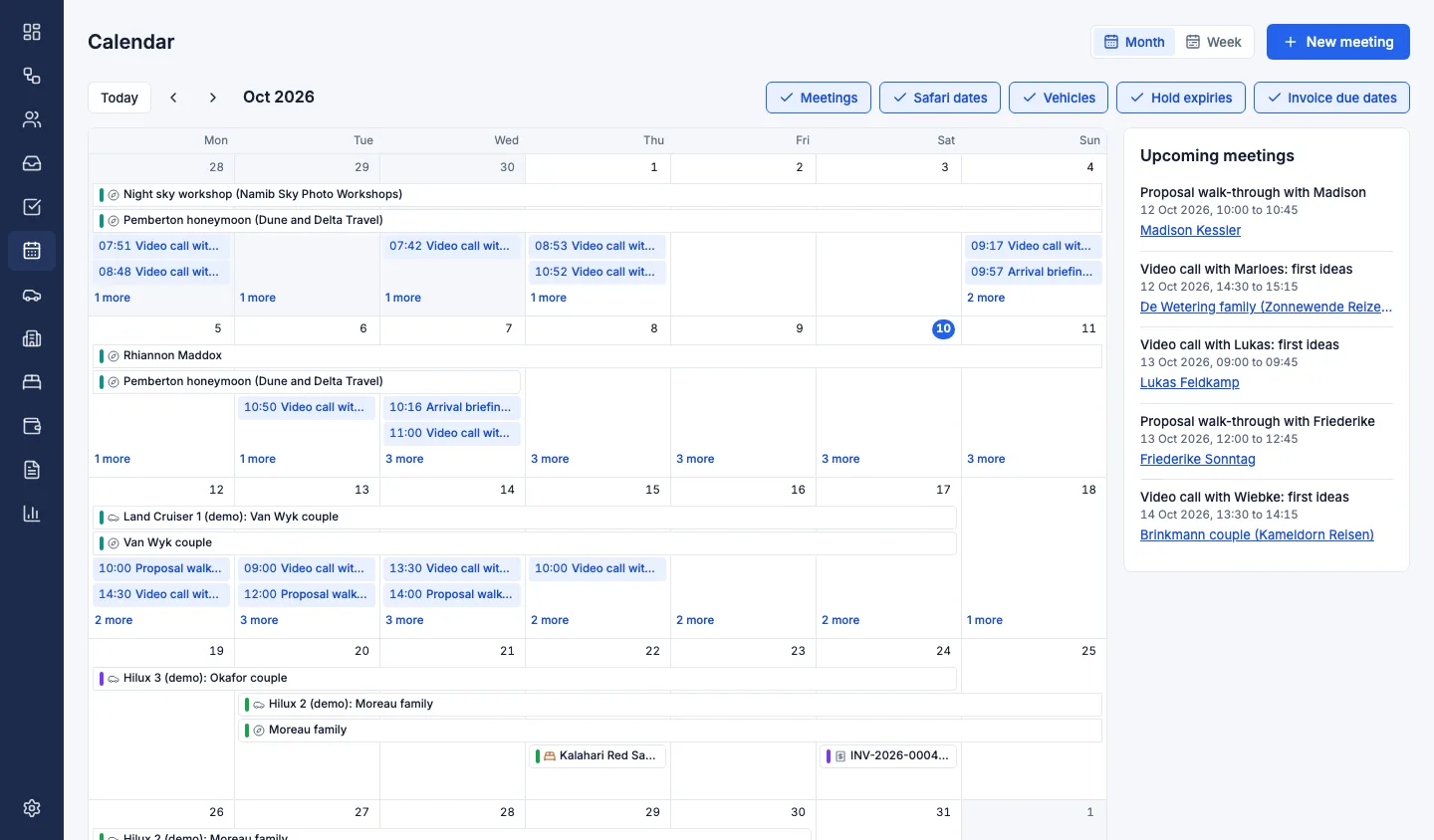
Then look at what is not yet due, but close. A balance due in the same week a hold expires, or the week you need a vehicle free, matters more than a deposit on a distant trip. Invoice due dates sit on the calendar with meetings, safari dates, vehicle bookings and hold expiries, so you can see both in one month.
Do not add currencies together and treat the sum as cash you can spend. Invoices can be in any currency. Chase the amount on the invoice the client received. A deal can hold any currency, with its value at the day's rate, which is for reading the pipeline. Quote the invoice in a reminder. A reconverted number starts an argument.
A reminder rhythm that stays polite
Reminders fail two ways. Too few, and the balance is open when people are packing. Too many, and you sound like a collections desk. Agree when someone writes, and what they say. One owner per invoice. A due date. A note of what was already sent.
Safari Studio does not send these notes. It shows what is open, how late it is, and when it is due. The team writes. That is the right split: the client booked with a person.
Before the due date, write if the money affects a decision you are about to make. For example, a lodge operator who needs a deposit before asking a camp to extend a hold. State the trip, the amount, the currency, the due date, and that they can pay by card from the invoice.
On the due date, one calm note is enough. Name the amount and the trip. Do not apologise for asking. If they have a question, you want it now.
A few days late, name the date that has passed and what is waiting on you: a lodge that will not confirm, a vehicle you cannot assign twice, or details you send only once the balance is in.
If departure is close, stop repeating the same email. Write shorter, from the person who knows the trip, or call. Ask if the card failed, or if an agency is waiting on its own traveller. That changes your next step. It does not clear the list.
Keep the thread with the client. Mail from every synced mailbox sits in one list, each thread linked to its client and deal. Gmail syncs both ways, and any other mail provider can come in through a forwarding address. A needs reply flag shows a thread waiting on you.
One person sends the reminder. Two emails in one morning are easy to ignore. Holds are a different job. On the holds board, a room is requested, held with an expiry, confirmed or released, and a chaser email is ready before a hold runs out. That note is for the lodge. The invoice note is for whoever owes you. Paying a lodge yourself does not mean the client has paid. Their invoice stays open until the payment is on the deal.
Card payments on the invoice
A card payment button on the invoice is the short path from intending to pay to having paid. The client checks the trip and pays, without a search for bank details. For someone already travelling, or an agent clearing several files in an afternoon, that can be the difference between this week and next month.
Some clients will only pay by transfer. Some amounts are large. Some cards fail. The button does not replace a clear invoice. When money arrives, by card or by transfer, track it against the deal. A paid invoice that still looks open gets another reminder, and a good client learns to ignore you.
Deposit and balance invoices, with every payment tracked against the deal, are how you see what is owed and what is paid, with no spreadsheet to keep up to date. Late payments are grouped by how late they are.
Put your logo, colours and theme on the invoice, as on the proposal, the quote and the client form. On Pro and Max, clients never see Safari Studio on the invoice. Lite adds a small Powered by Safari Studio line. Use the currency you agreed. Say what the payment covers, in words the client already knows, so the figure is recognisable from the quote.
If the card fails, treat that as a reply. Resend the invoice. Ask whether another card, or a transfer, is easier. Leave it open until the payment is recorded against the deal. Do not mark it paid because someone said it was.
Tour operator invoicing beside the deal
The invoice belongs with the sale. The quote is made from the costing, day by day, from the lodges, vehicles and activities at the rates you negotiated. An accepted quote becomes the deposit invoice, then the balance invoice. Ask whether the March group has paid, and the answer should be on the deal, not in sent mail.
On the deals board, stalled deals and unanswered mail are flagged. If the deposit is late, that may be why a lodge has not moved on. If the deposit is paid and the deal is quiet, you have a sales question, not a cash one.
Invoice the company that owes you. Travellers are the people on the trip, which is not always the debtor. An invoice to a traveller, when the contract is with an agency, names the wrong party on the ageing list. If you are the agency, the operator's bill is a supplier invoice, not the one you send your client. Each company keeps its own book. Safari Studio is for safari operators, DMCs and the travel agents who sell their trips.
A weekly half hour
Same morning each week, open the money screen. Every late row needs a next step: who writes, and whether anyone already has. If you suspect silence, check the inbox first. Needs reply flags exist so a client's question does not sit unseen.
On the calendar, compare invoice due dates with hold expiries and safari dates. A due date beside a hold expiry deserves a note before it is late. A due date beside departure is already tight. Then record payments that have arrived and are not yet on the deal. The list is only as true as that step.
If this takes all morning, the book is stale or unclear. Fix that before you add another report. In a busy month, name a colleague to cover, with the same screen and the same mail. Clients notice whether the note arrived. They do not know who was on the road.
What to pin above the desk
- Raise the deposit from the accepted quote, and the balance when you said you would.
- Give each a due date, in the currency you agreed.
- Leave the card payment button on the invoice, in your brand.
- Once a week, read what is owed, grouped by how late it is.
- Remind from that list, from one named person, and do not repeat a note that has had no reply.
- Record every payment on the deal, whether it came by card or not.
- Read due dates beside hold expiries and safari dates.
- Answer a question. It is not a refusal.
That is the practice: ageing you can trust, a reminder a client can bear, and a way to pay on the invoice itself.
Safari Studio is a CRM for safari operators, DMCs and the travel agents who sell their trips, on a monthly, quarterly or yearly subscription. Plans are on the pricing page. The trial is free, and no card is needed to start.
If you want to see the money screen on a trip of your own, book a demo or start a free trial.