

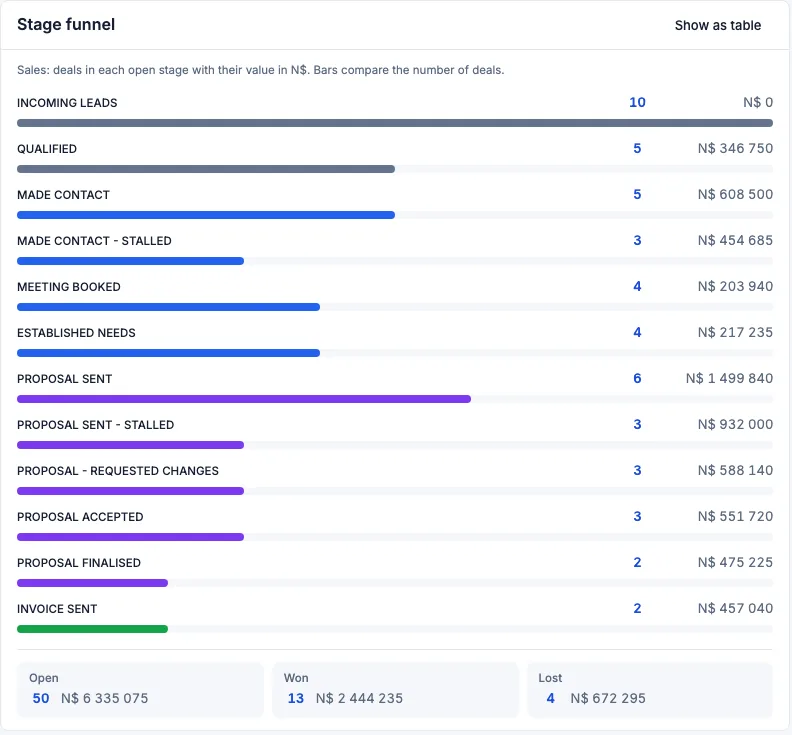
A status spreadsheet is a kind attempt to remember every open quote. It lists the guest, the dates, the value and a column called status. By Thursday that column is already behind, because the real movement happened in an email, a lodge reply, or a week in which nobody wrote at all. If you need to track safari quotes, the useful question is not what you last typed in the sheet. It is whose move it is today.
Track safari quotes by whose move it is
Most open quotes sit in one of three places. The quote is with the guest, and you are waiting to hear whether the trip still fits. The quote is waiting on a supplier, usually a lodge, a camp or a vehicle operator, before you can send or confirm a price you can stand behind. Or the quote has gone quiet: nobody has written, the dates are creeping closer, and the file has not moved.
That is a view of work in progress. It is not a forecast. The deals board for open safari quotes is built for that view. Website enquiries arrive on the board as new deals, with the email thread linked. You drag deals through your own stages. Stalled deals and unanswered mail are flagged. Each deal carries its value in any currency, at the day's rate, so the figure on the card is the figure you quoted.
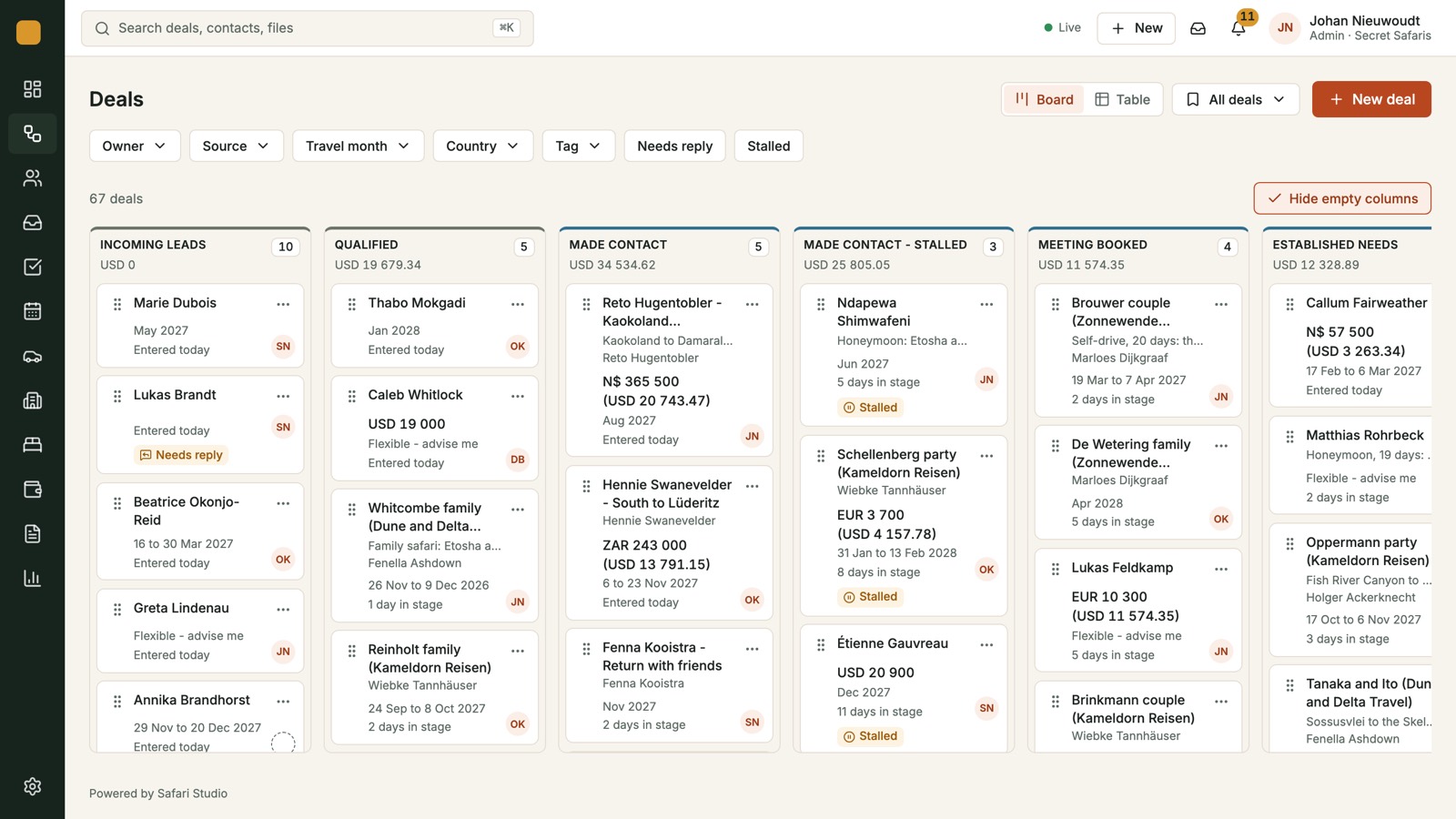
The columns run from Incoming leads to Established needs. Each card shows the client, the travel dates, the value in its own currency with the USD equivalent, and how many days the deal has sat in that stage. You read whose move it is from the column, the flags and the days, rather than from a status cell someone hoped to update before a call.
What you can see without opening the file
A reservations desk rarely fails for lack of detail. It fails because the detail is split. The guest's last note is in one mailbox. The lodge's reply, a room held until Friday, is in another. The price lives in a costing. The status sheet says waiting, which could mean any of those things, and often means whichever was true when someone last had a spare half hour.
On the deals board the card is the index. Travel dates tell you whether this quote is for the coming weeks or for a season away, which changes how firmly you chase. Value, in the quote currency and as a USD equivalent, tells you the size of the open work without opening the costing. Days in stage tells you whether the file is moving or merely present.
The mail sits with the deal. Gmail syncs both ways, so a reply you send is the thread the guest already has, and their answer comes back beside the trip. Any other mail provider can come in through a forwarding address. In the inbox, with each thread linked to its deal, mail from every synced mailbox sits in one list. Needs reply flags mark the threads where a guest is waiting on you. A guest who has written is not the same problem as a guest who has your quote and has not written back.
For example, a consultant at a DMC might start the week with new website enquiries, proposals already out, rooms still unconfirmed, and files with no mail either way. Those should not look identical in one status column. On the board they do not. New enquiries are deals, sent quotes show their days in stage, and a hold that has not come back is a supplier wait.
Quotes that are with the guest
A quote is with the guest once you have sent something they can answer: a proposal, a costing they can read, or a clear note of dates and price. Until they reply, the job is not to rebuild the trip every morning. It is to know the ball is in their court, and to notice if it stays there.
Your stages should say that in the language the team already uses. You drag deals through your own stages. On a deal, the stage bar runs from Incoming leads through Proposal accepted to Tour completed, so anyone opening the file can see how far this trip has come without reading the whole thread.

Keep two ideas apart. Needs reply means the guest wrote and you have not answered. A quote with the guest means you wrote, and you are waiting. Mixing them is how a status column becomes unreliable. One needs an answer today. The other needs a calm follow-up after a few quiet days, and only if the travel dates justify it.
For example, a lodge operator in the Okavango might send a proposal for a short mobile trip and then hear nothing for a week. The card still shows the client, the dates, the value and the days in stage. The thread is linked, so the follow-up refers to what you actually sent, not to a note that says chased.
When you write, email templates and signatures are there for every person and every mailbox, so the chase can sound like the person who knows the trip. The proposal already out can carry a route map, drive times, lodge photos and a day-by-day story, in your brand, with a PDF. Those pages sit with proposals and route maps. The board only needs to show that the proposal is out, and how long it has been out.
If the guest accepts, you treat the deal as accepted. Until then it is still an open quote, and it stays on the board as work in progress.
When the quote is waiting on a supplier
Some quotes are not slow. They are blocked. You cannot send a price you will stand behind, or tell a guest a room is held, until a lodge, a camp or a vehicle supplier answers.
That wait should look like a wait. From the deal you ask each lodge for the rooms you need. Every request then sits on the holds board, with each room and its expiry: requested, held with an expiry date, confirmed or released. Before a hold runs out, a chaser email is ready to go, so a room does not lapse because the date lived only in a notebook.
Read the holds beside the deals board, not instead of it. If a card has sat in stage and the hold is still requested, the next action is a chase to the property, not another note to the guest. If the hold is confirmed and close to expiry, the guest may need a decision before you release a room you will not get back in the busy weeks. The deal shows that the quote has not moved. The hold shows why.
Price can block a quote in the same way. Day-by-day costing is built from your lodges, vehicles and activities, at the rates you negotiated. Each amount is stored with the exchange rate of the day, so the margin stays right when rates move, and the value on the deal stays tied to that rate. If you are still waiting on a camp rate, the quote is not with the guest yet. Moving it to a sent stage, only because the sheet had no better label, is how a guest receives a figure you later have to correct.
A vehicle can block a quote too. On the fleet timeline, every vehicle is one row, with trips, services and blocked days on that line. Assign a car to a trip and the clash shows before it happens. Leave the deal in the stage that means blocked, and you do not need a separate status word.
Quotes that have gone quiet
Quiet is the state a status spreadsheet hides best. Nothing is wrong enough to shout. No guest has complained. The row still says pending. Meanwhile the days add up, and the travel date gets closer.
Stalled deals and unanswered mail are flagged. Days in stage on the card is the plain version of that signal. You do not have to remember when you last touched the file. If a quote has sat still while the ones around it have moved, it is the one to open.
A small set of rules can do some of that remembering. Automations can turn new emails into deals, flag replies, move stalled deals and create follow-up tasks. Used narrowly, they keep the board current without a Friday ritual of copying rows from one sheet to another.
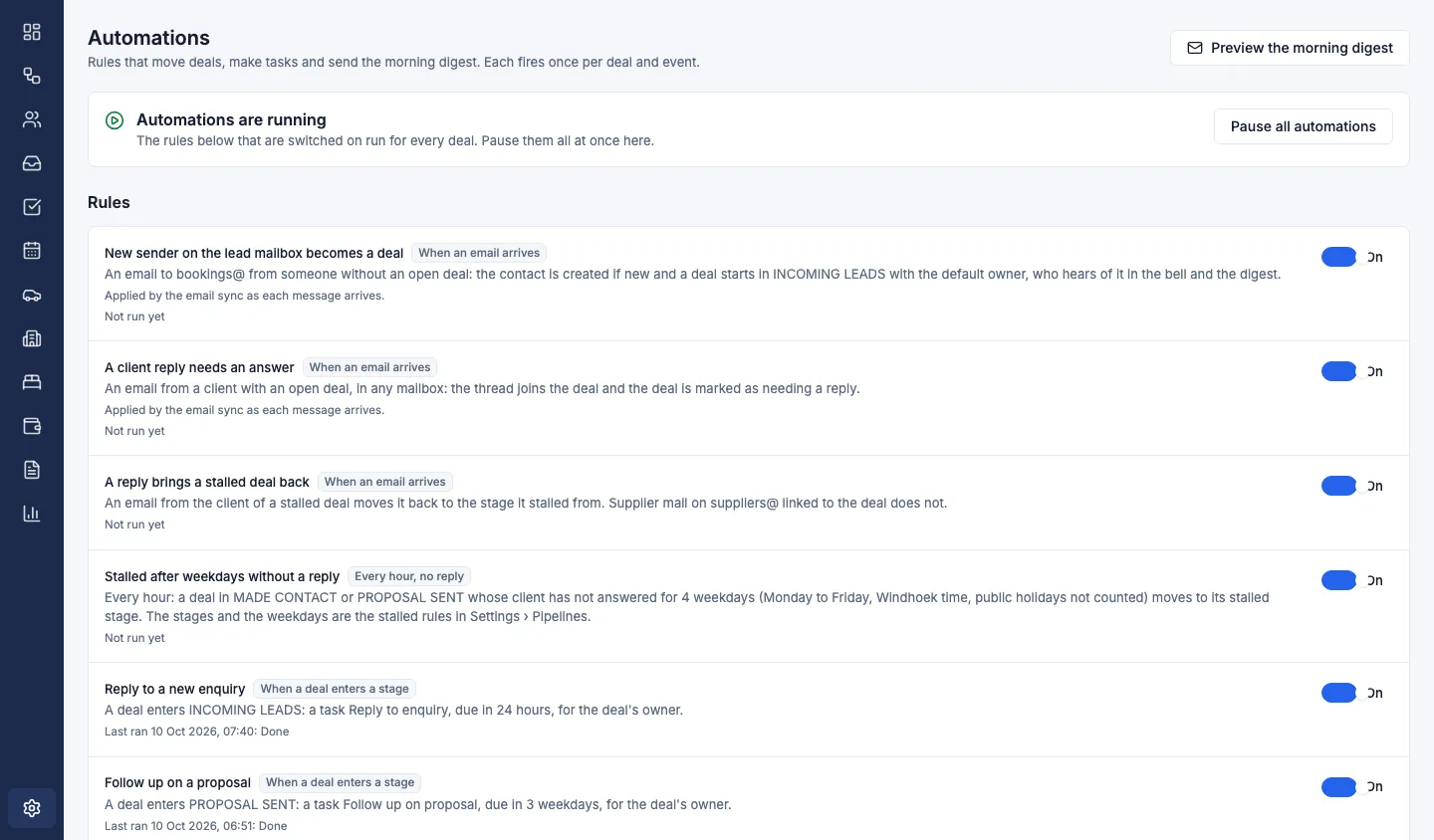
A new enquiry becomes a deal, so it appears among Incoming leads rather than waiting in a folder. A reply gets flagged, so mail that needs you is not buried. A stalled deal can create a follow-up task, so the quiet file has a name on it.
Quiet is not always a chase. Sometimes the guest has made other plans, and the right act is to move the deal out of the open columns. The board will not make that judgement. It will stop the file from vanishing into a sheet that only one person understands.
A check before the inbox takes over
The weakness of a status spreadsheet is timing. You update it after the real work, if you update it at all. The guest writes early. The lodge replies at midday. By the time both notes are copied across, the desk has already acted on partial information, or has not acted at all.
A shorter check fits the board, and it does not need a status meeting. Start with unanswered mail, because a guest who has written is waiting on you. Needs reply flags exist so no client waits because their note landed in the wrong mailbox. Then look at holds that are still requested, or close to expiry. The chaser is already prepared, so sending it is a decision rather than a search. Then scan days in stage on quotes that are with the guest, and write any follow-up from the thread, not from memory.
If a column has become a resting place, the stage name is probably wrong, or the chases are not happening. The columns can match the work, because you drag deals through your own stages. Once needs are established, someone on the desk should be able to say whether the next move is yours, the guest's or a supplier's.
This is a view of open quotes, not a prediction of the month. A card further along is not a booking until the guest has accepted and you have treated it as accepted. Value on the card is the quoted amount, in its own currency with the USD equivalent, at the day's rate. It is not a win rate.
Safari Studio is a CRM for safari operators, DMCs and the travel agents who sell their trips. Plans are monthly, quarterly or yearly, with a free trial and no card needed. Current plans are on the pricing page.
Book a demo and walk a quote that is with a guest, one waiting on a lodge, and one that has gone quiet. You can book a demo or start a free trial.