

A client who has never driven your roads cannot picture the trip from a list of lodge names. A travel itinerary route map puts the journey on one page: where they sleep, how the days join up, and how long each transfer takes. That picture is often what turns a careful maybe into a booking. It answers the question people hesitate to ask first. Will this feel like a holiday, or like a timetable with nice camps attached?
You already know the route. The client does not. They see three famous places on a quote and wonder whether Tuesday is a scenic morning or a long grind before lunch. Until someone shows the shape of those days, the price is a number without a journey behind it. The map is that journey, small enough to read in one sitting.
A travel itinerary route map is the trip, not a decoration
A pretty map on a cover is not the same thing as a map the client can use. Decoration says the trip looks adventurous. A working map says where they will be each night, which stop follows which, and how the transfers sit between them. Confidence comes from the second kind.
The questions that arrive after a quote goes out are predictable. Is the camp north or south of the gate? Do we double back? Is the long drive on the same day as the flight? Those are not fussy questions. They are how a traveller checks that the person planning the trip has driven it in their head. Numbered stops, nights at each place, and a drive time beside each leg give them that check without another call.
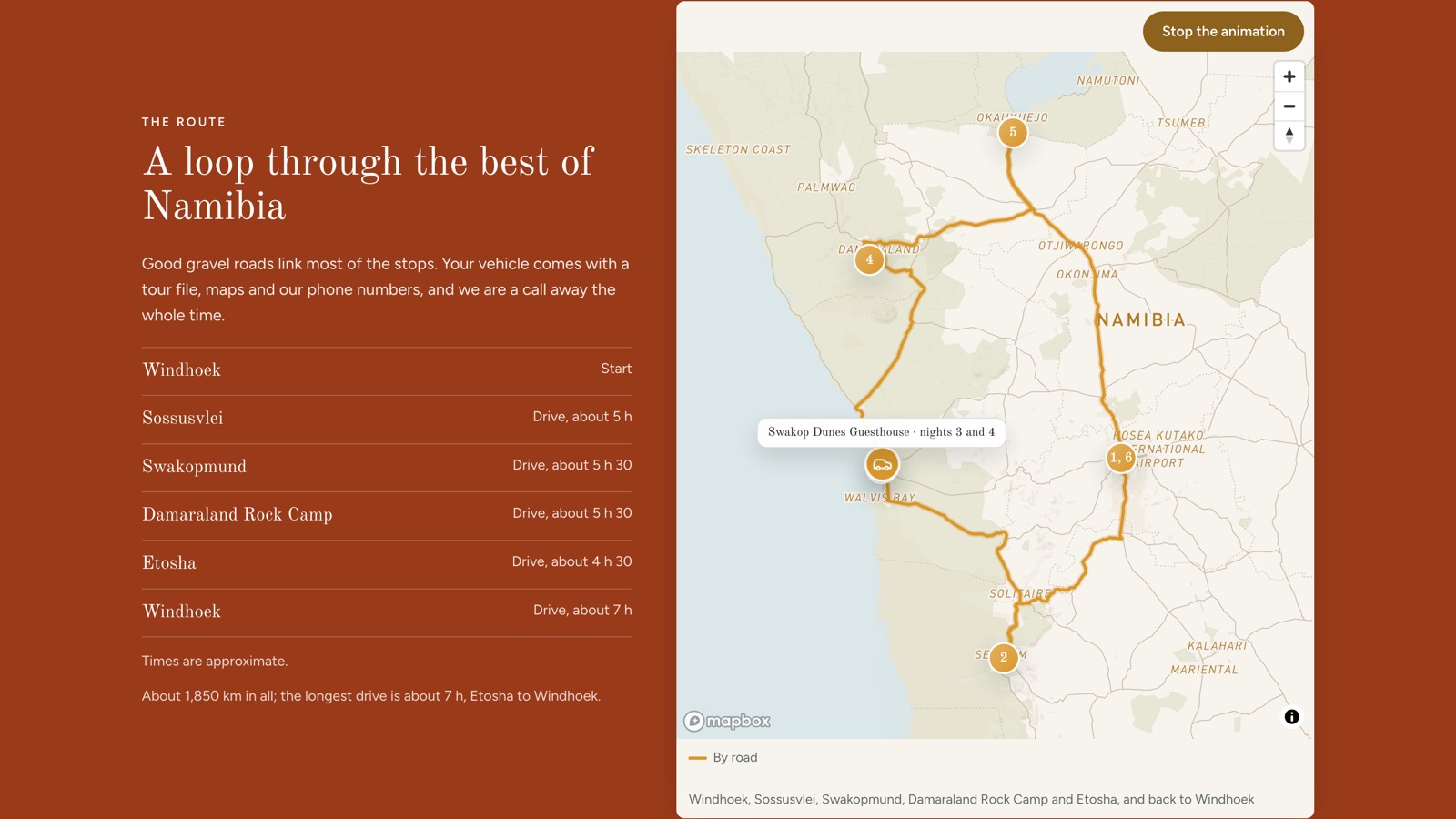
For example, a DMC planning a loop for a couple with two weeks and a dislike of early starts can show a closed shape, not a column of lodge names. The client sees that they do not retrace the same road, that the longer transfer sits on a day with no afternoon activity, and that the last night is close to the airport. None of that needs a paragraph of reassurance. The map does the work.
Travel agents selling a trip they do not operate face the same gap. They may know the lodges and not the gravel between them. A page with the route drawn and the times written down lets them answer in the meeting, instead of promising to check and calling back.
Safari Studio builds a client proposal with a route map and drive times from the costing in one click. The page carries lodge photos and a day-by-day story, in your brand, and a PDF comes with it. The client can read it on a phone or print it for the person who still wants paper. The map and the story come from the trip you have already costed, rather than from a separate file that can drift out of date.
What the client is weighing when they look at the route
Most people booking a private journey are not comparing you with a brochure they half remember. They are comparing the trip in front of them with a holiday they can already imagine: a week by the sea, a city they know, a lodge they have stayed in before. The route has to make the unknown feel as solid as the familiar.
Three things usually decide it.
- Shape. A line of stops that marches in one direction feels different from a route that hops back and forth. Clients rarely say logistics. They say the trip looks tiring, or that it looks calm. Numbered stops on a map make the shape obvious. A list does not.
- Nights. Two nights at a place reads as a pause. One night reads as a bed between drives. Nights per stop, beside the route, show where the trip breathes. A list of lodges in order hides that rhythm, and clients fill the gap with worry.
- Transfers. This is where drive times do the selling. A time is a fact. A phrase like about half a day is a mood, and moods are easy to fear.
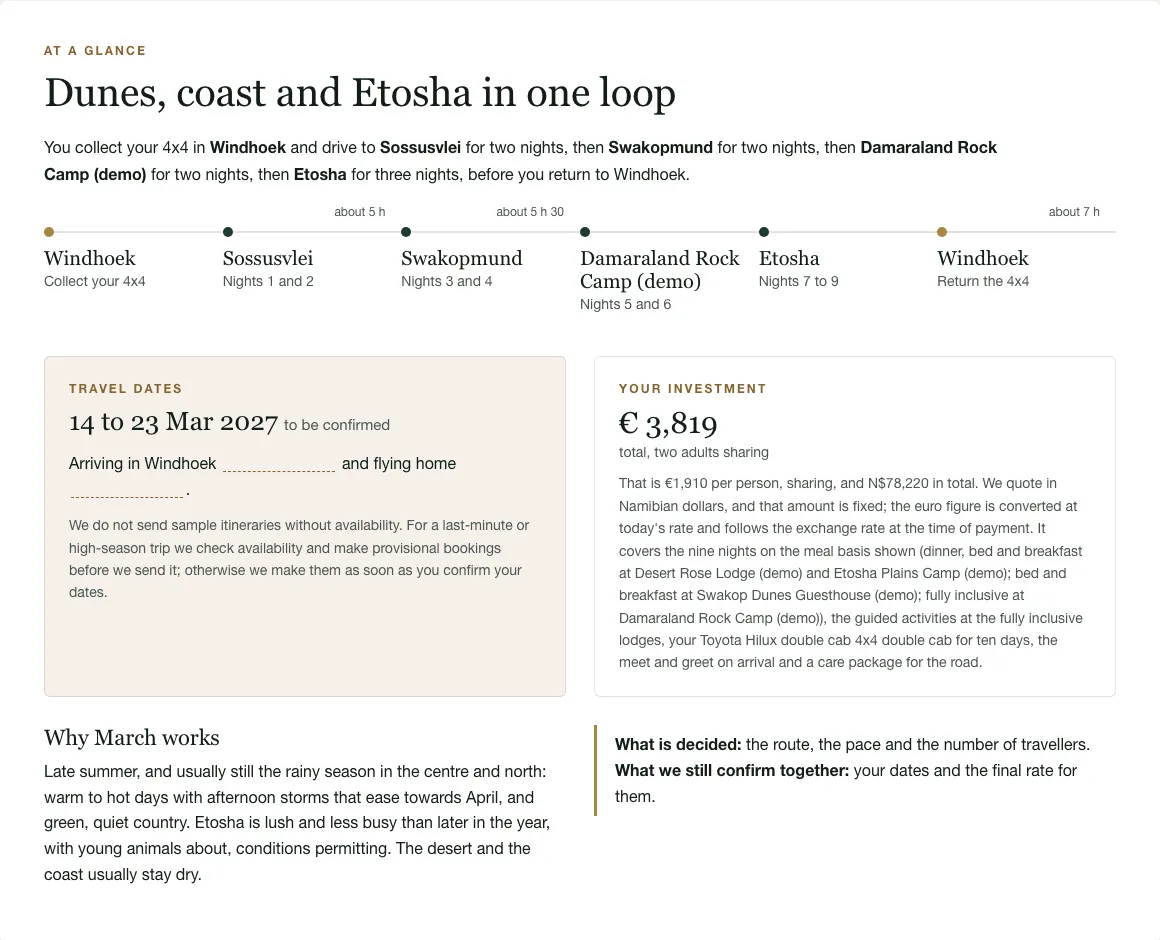
Dates and price belong on that same view. The client can hold the whole offer at once, instead of flipping between a map in one email, a costing in another, and a lodge list in a third. One page is easier to forward to a partner, a parent, or an agent who was not on the call.
You do not need to narrate every kilometre. You need the client to see that someone has already counted them. People decide whether to keep reading in that first look. Give them the skeleton there, and the day-by-day writing can stay short.
Why drive times sell the trip
Drive time is the detail clients use to judge how the holiday will feel. A transfer of a few hours after breakfast, with the afternoon free at the next lodge, sounds like a journey. A transfer that takes most of the day, set beside a game drive, sounds like a schedule. The lodges can be identical. The times change the verdict.
Operators sometimes soften long legs because they worry the truth will lose the booking. Hiding the long day creates a worse problem later. A client who discovers it after they have paid feels misled. A client who sees it on the proposal can plan around it: an early night, no ambitious activity, a picnic instead of a long lunch. They can book because the day has been designed, not because it was hidden.
Say what the time is, and say what the day is for. If the long drive is the day, write it that way in the story. If a shorter hop leaves room for a walk before sunset, the time makes that promise believable. Drive times between every stop, written beside the route, answer how far it really is before that email is sent.
There is a second reader: the person who did not join the call. They open the link on a Sunday evening with no memory of your explanation. A number next to each leg is something they can trust without you in the room. That is what turns another meeting into a yes, or into one precise question.
Be straight about the roads you know. If a leg is a flight, a boat or a border, do not let the map pretend it is all one drive. The facts on the page have to match the trip you will actually run. A route that invents smoothness costs more trust than a plain list ever did. The proposal shows drive times between stops. It does not replace your judgement about which road is sensible in which month.
For example, a tour operator running a family trip from the delta down to the pans can treat the long repositioning day as its own event, with the time beside it, and keep the game days short on the road. Parents do not need a speech about pacing. They can see the children will not spend every morning in a vehicle.
Lodge pages that belong to a pin on the map
A map without the lodges is a diagram. A lodge list without the map is a catalogue. The client settles when the two belong to each other: this pin, this camp, this many nights, this photograph, this drive to the next pin.
Lodge pages with their own photos do that job. The client leaves the route, sees the place, and comes back knowing what the stop is for. A pool in the late light answers a different question from the drive time. One is whether they will like being there. The other is whether they will be too tired to enjoy it.
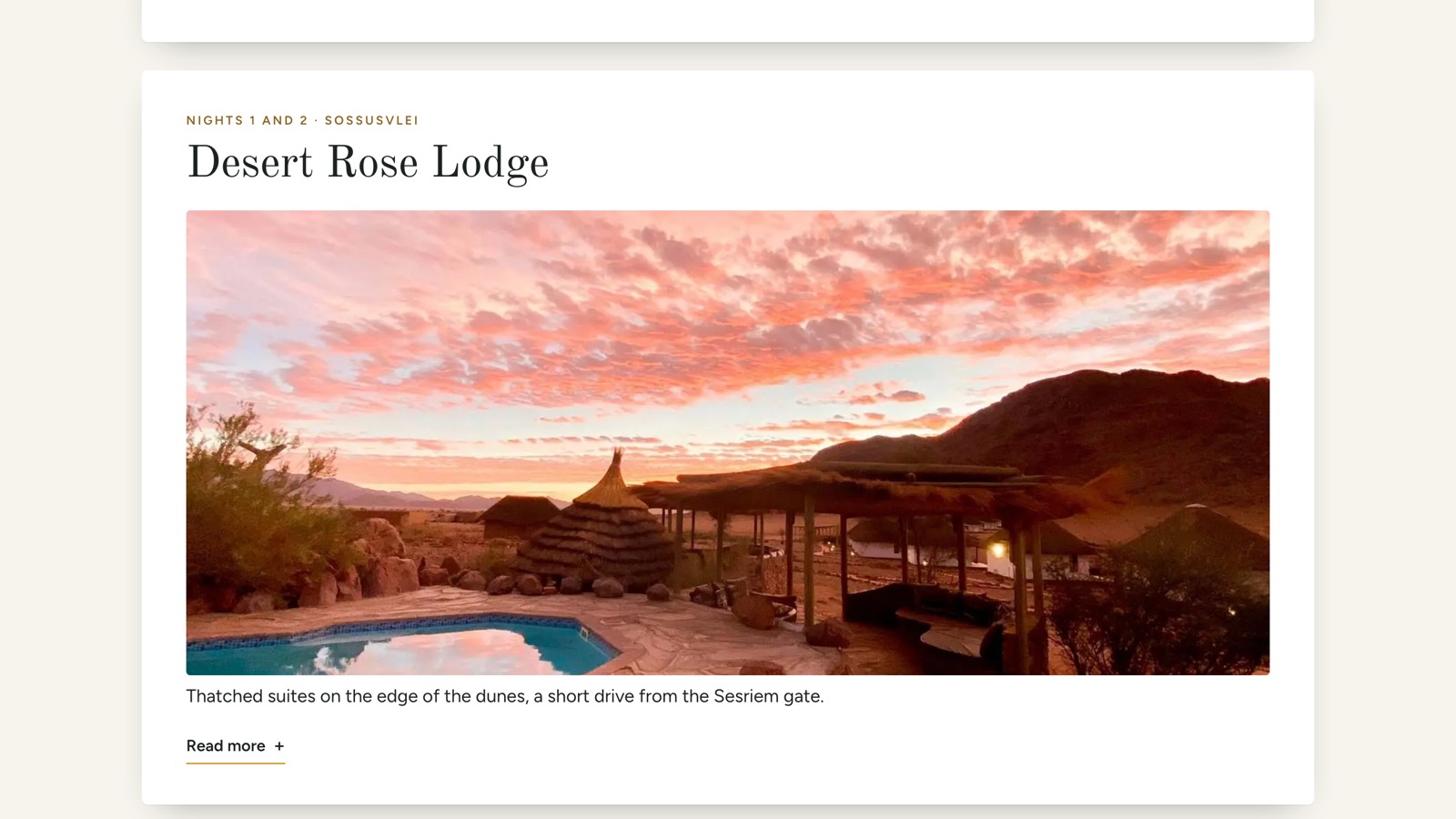
Keep the day-by-day story specific. Say what happens, not a description the photo already gives. Arrival, the activity that belongs there, the evening, and how long the next leg takes. Short paragraphs suit a phone, often with someone reading over a shoulder.
Your logo and colours belong on that page. Branding on the proposal, quote, invoice and client form keeps the same mark from the first look through to payment. On Pro and Max, clients never see Safari Studio on those pages. Lite adds a small Powered by Safari Studio line. The route, the photos and the story remain yours.
From the costing to a page they can trust
The route only builds confidence if it matches the trip you have priced. Build it day by day in the costing, with your lodges, vehicles and activities at the rates you negotiated. Each amount is stored with the exchange rate of the day, so the margin stays right when rates move. One click turns that costing into the client's page. The map they open is the trip you have already checked, not a second version typed up for the layout.
Rooms should be real before the map promises them. Every room you ask a lodge for can sit on the holds board: requested, held with an expiry date, confirmed or released. Before a hold runs out, a chaser email is ready to go, so nothing lapses quietly. A drive time also assumes a vehicle that is free. The fleet timeline keeps every vehicle on one line, with trips, services and blocked days. Assign a car to a trip and a clash shows before it happens. The client never sees those boards. They see a transfer that can actually run.
When they say yes, quotes become deposit and balance invoices, with a card payment button, and every payment is tracked against the deal. The price beside the route should be the price the invoice asks for. Plans are listed on the pricing page. Safari Studio is sold as a monthly, quarterly or yearly subscription, with a free trial and no card needed to start.
After the map goes out
Route maps do not replace a good conversation. They make it shorter. You spend less time proving the trip hangs together, and more time on the guide, the camp and the month: the parts only you can offer.
The client arrives already oriented. They have seen the shape, counted the nights and noticed the long day. You can both look at the same page and talk about the one stop they are unsure of, instead of walking the whole itinerary again.
Mail from synced mailboxes sits in one list, each thread linked to its client and deal. That is what inbox and enquiries keeps beside the trip. On the deals board, stalled deals and unanswered mail are flagged, so a quiet deal is a real pause, not a missing file. The follow-up is about dates or budget.
Show the road. Show the time. Do not ask anyone to take the shape of the holiday on faith. A client who can see the days is much easier to help, including when the honest answer is that another month would suit them better.
When you are ready to put the route on the page your clients open, book a demo or start a free trial. No card is needed for the trial. Bring a real itinerary. You will see quickly whether the days read as a holiday.